Understanding Normal Blood Sugar Levels by Age
Understanding Normal Blood Sugar Levels by Age
Blood sugar levels play an important role in maintaining overall health. Glucose is the body’s primary source of energy, but when blood sugar levels become too high or too low, it can lead to serious health problems over time.
Many people assume blood sugar levels remain the same for everyone, but age, lifestyle, diet, activity level, and medical conditions can all influence glucose balance.
Understanding normal blood sugar ranges by age can help you monitor your health better and detect early signs of diabetes or other metabolic conditions.
What Are Blood Sugar Levels?
Blood sugar, also called blood glucose, refers to the amount of sugar present in the bloodstream.
The body gets glucose from:
- Food and beverages
- Stored energy in the liver
- Carbohydrates consumed daily
Insulin, a hormone produced by the pancreas, helps regulate blood sugar levels.
When insulin production or response becomes abnormal, blood sugar may rise or fall beyond healthy limits.
Why Monitoring Blood Sugar Levels is Important
Regular blood sugar monitoring helps:
- Detect diabetes early
- Prevent long-term complications
- Monitor treatment effectiveness
- Maintain healthy energy levels
- Reduce risks of heart, kidney, and nerve damage
Early diagnosis can significantly improve long-term health outcomes.
Normal Blood Sugar Levels for Adults
Fasting Blood Sugar (8–12 Hours Without Food)
- Normal: 70–99 mg/dL
- Prediabetes: 100–125 mg/dL
- Diabetes: 126 mg/dL or higher
Random Blood Sugar Levels
- Normal: Below 140 mg/dL
- High Risk: 140–199 mg/dL
- Diabetes: 200 mg/dL or higher
HbA1c Levels
- Normal: Below 5.7%
- Prediabetes: 5.7%–6.4%
- Diabetes: 6.5% or above
These values may vary slightly depending on health condition and medical advice.
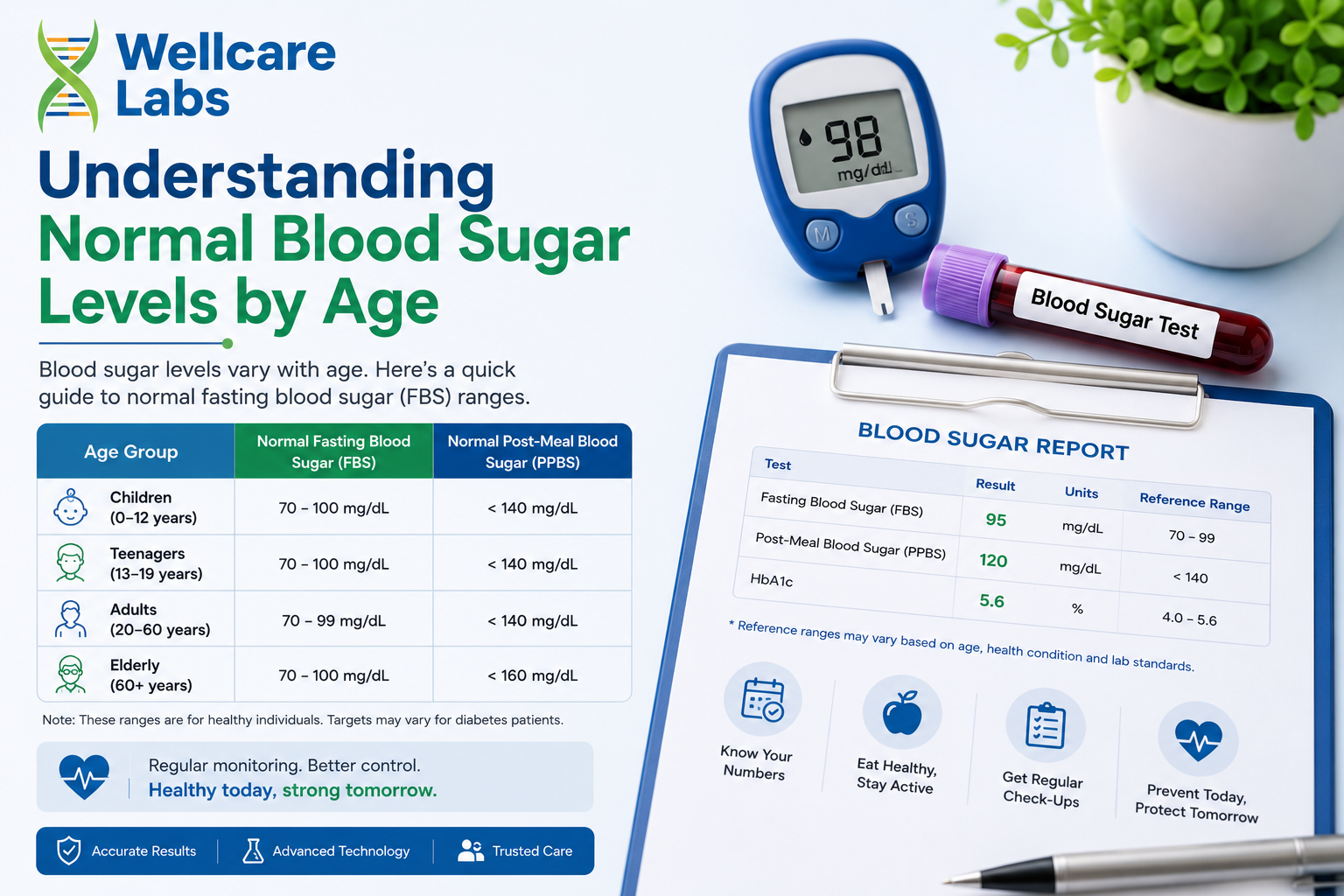
Normal Blood Sugar Levels by Age
Children and Teenagers
Children generally have slightly more variable blood sugar levels because of growth, activity, and eating habits.
Typical Range:
- Fasting: 70–100 mg/dL
- After meals: Less than 140 mg/dL
Parents should monitor symptoms carefully if there is family history of diabetes.
Adults (20–40 Years)
Healthy adults usually maintain stable blood sugar levels with proper diet and physical activity.
Ideal Targets:
- Fasting: 70–99 mg/dL
- Post-meal: Less than 140 mg/dL
Lifestyle habits during this age strongly affect future diabetes risk.
Middle Age Adults (40–60 Years)
As metabolism slows down with age, blood sugar imbalance becomes more common.
Risk factors increase due to:
- Stress
- Sedentary lifestyle
- Weight gain
- High blood pressure
Regular preventive testing becomes very important during this stage.
Older Adults (60+ Years)
Older adults may experience slight fluctuations in blood sugar due to:
- Reduced insulin sensitivity
- Medications
- Chronic illnesses
- Reduced physical activity
Doctors may sometimes recommend slightly flexible targets depending on overall health condition.
Factors That Affect Blood Sugar Levels
Several factors can influence glucose levels throughout the day.
Common Factors Include:
- Diet and sugar intake
- Physical activity
- Stress and sleep
- Medications
- Illness or infection
- Hormonal changes
This is why doctors often recommend multiple tests for accurate diagnosis.
Symptoms of High Blood Sugar
High blood sugar may cause:
- Excessive thirst
- Frequent urination
- Fatigue
- Blurred vision
- Slow wound healing
- Sudden weight loss
Ignoring these symptoms can increase the risk of long-term complications.
Symptoms of Low Blood Sugar
Low blood sugar levels may lead to:
- Dizziness
- Sweating
- Shakiness
- Confusion
- Weakness
- Hunger
Severely low glucose levels require immediate medical attention.
Tips to Maintain Healthy Blood Sugar Levels
Simple lifestyle changes can help maintain balanced glucose levels.
Helpful Habits:
- Eat balanced meals
- Reduce refined sugar intake
- Exercise regularly
- Stay hydrated
- Sleep properly
- Manage stress levels
- Get regular health checkups
Consistency plays a major role in diabetes prevention and management.
Importance of Regular Blood Sugar Testing
Routine blood sugar screening helps:
- Detect prediabetes early
- Monitor diabetes treatment
- Prevent serious complications
- Support healthier lifestyle planning
People with family history, obesity, or sedentary lifestyles should consider regular testing.
Choosing a Reliable Diagnostic Lab Matters
Accurate blood sugar testing is essential for proper diagnosis and health monitoring.
Wellcare Labs offers reliable pathology and diagnostic services with advanced testing methods, experienced professionals, and timely reporting. Their commitment to precision and patient care helps individuals monitor their health with confidence and clarity.
Final Thoughts
Understanding normal blood sugar levels by age helps individuals become more aware of their health and take preventive action when needed.
Since blood sugar imbalance often develops gradually, regular monitoring and healthy lifestyle habits are extremely important. Early diagnosis and timely management can reduce the risk of diabetes-related complications and support long-term well-being.
Preventive healthcare and routine testing are small steps that can make a major difference in overall health.