Full Body Checkup in Pune at Home: What Happens After the Results Come Back?
Getting blood drawn used to mean taking half a day off work, sitting in a waiting room, then waiting again for the actual draw. A full body checkup in Pune at home skips basically all of that; someone shows up, does the draw, and leaves, usually in under 20 minutes. But a lot of people still hesitate, mostly because they're not sure how accurate it actually is compared to going to a lab in person or what corners might be getting cut to make it convenient. At Wellcare Labs, we get this question constantly, so let's actually get into it.
Why People Still Assume Home Collection Is Somehow Less Accurate
This assumption's pretty common, and honestly, it made more sense a decade ago than it does now.
- Sample handling has genuinely improved; proper cold-chain transport means blood stays at the right temperature from your home to the actual lab, the same as if you'd walked in yourself.
- The person drawing your blood for a full body checkup in Pune at home is a trained phlebotomist, not someone winging it, with the same qualifications as lab-based staff.
- Results go through identical processing once they reach the lab; there's no separate "home collection" lab running lower standards somewhere.
- The only real difference is where the needle goes in; everything after that follows the exact same path a walk-in sample would.
What Actually Gets Tested in a Typical Full Body Checkup
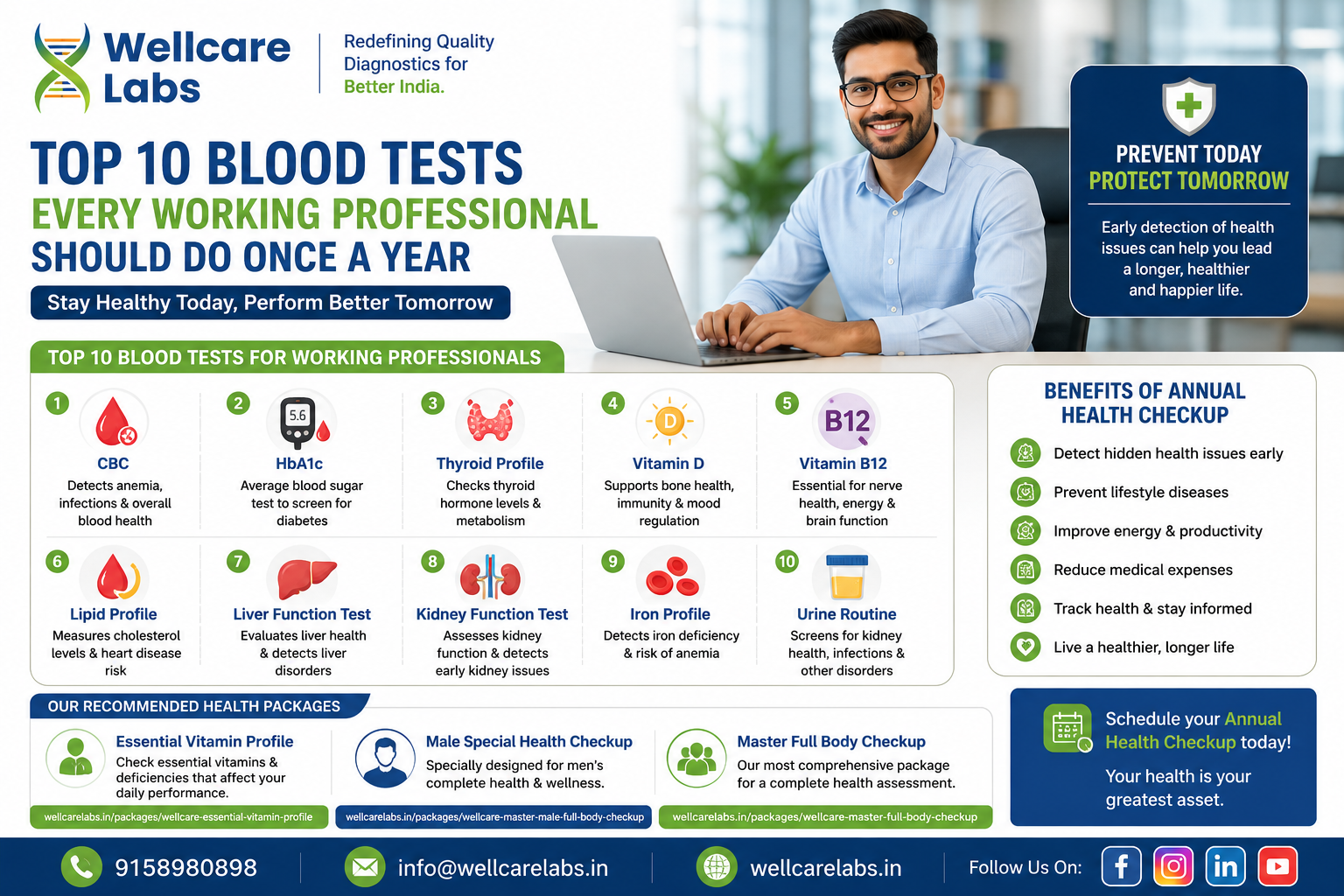
People often assume "full body checkup" means something vague, but it's actually a fairly specific set of panels covering different systems.
Blood sugar and diabetes markers – Fasting glucose and HbA1c together, since one's a snapshot and the other's your average over roughly three months.
Lipid profile – Cholesterol, HDL, LDL, triglycerides, and the usual heart-risk indicators most doctors want tracked yearly regardless of age.
Liver function - which is where the liver function test comes in specifically, is more on that below since it's honestly one of the more misunderstood parts of the whole checkup.
Kidney function and complete blood count – Creatinine, urea, hemoglobin, and white cell count, catching anemia or kidney stress before it becomes symptomatic.
The LFT Test Nobody Actually Explains Properly
Most people see "LFT" listed on their report and have no idea what it's actually checking beyond a vague sense it's “something to do with the liver.”
An LFT test, or liver function test, is not a single number but a whole panel of indicators (including SGPT and SGOT, plus bilirubin, alkaline phosphatase, and others depending on which lab you go to). SGPT and SGOT are enzymes that we get in our blood when liver cells are damaged or under stress, but an elevated level in either of them doesn't necessarily indicate disease (sometimes we just had some alcohol or certain medications yesterday or went crazy in the gym).
Bilirubin, on the other hand, measures whether or not your liver is doing a good job processing waste products of red blood cells, and an elevated level can range from benign to something to actually track. This is exactly why an LFT test result needs context from an actual doctor rather than just eyeballing whether a number's in red or black on the report.
Why Timing Actually Matters for a Full Body Checkup in Pune at Home
A lot of people book their appointment whenever it's convenient without thinking about whether the timing actually affects results.
Fasting tests genuinely need 8-12 hours without food, and this matters more for some panels than others; glucose and lipid profile results can shift meaningfully if you've eaten recently, even something small. Morning appointments tend to work best for this exact reason, since fasting overnight is a lot easier than trying to avoid food for 10 hours during the middle of your day.
If you're specifically getting tests done alongside everything else, timing doesn't need to be quite as strict, though most labs still recommend fasting for the full panel just to keep things consistent across all the tests being drawn from the same sample.
What Makes a Checkup "Smart" Versus Just a Standard Package
Smart health checkup packages in Pune have become a genuinely common term recently, and it's worth understanding what actually separates this from a regular, fixed test list.
Tests Actually Matched to Your Risk Profile
Rather than everyone getting an identical panel, smart health checkup packages in Pune typically start with a quick questionnaire about your age, lifestyle, and family history before recommending specific additions.
Digital Reports You Can Actually Track Over Time
A single report tells you where you stand today, but smart health checkup packages in Pune increasingly include some kind of dashboard showing how your specific numbers, like LFT test results, trend across multiple checkups.
A Real Explanation, Not Just Numbers On a Page
Good smart health checkup packages in Pune include an actual consultation and someone walking you through what an elevated SGPT or a borderline glucose reading genuinely means for you specifically.
Why Home Collection Genuinely Makes Sense for Certain People More Than Others
It's not that home collection is universally better; it's just genuinely more practical for specific situations that come up constantly.
Elderly patients who find travel physically difficult benefit enormously, since a full body checkup in Pune at home means they're not navigating stairs, traffic, or a crowded waiting room just to get bloodwork done. People managing chronic conditions who need regular monitoring and quarterly LFT test checks for someone on certain medications, for instance, save a genuine amount of time over months and years by not repeatedly commuting to a lab.
Busy professionals who'd otherwise skip their annual checkup entirely because finding a free weekday morning feels impossible often actually follow through when the appointment comes to them instead.
The Question People Forget to Ask: What Happens If Something's Wrong
This genuinely matters more than people think about upfront, since a checkup's only useful if you actually understand and act on the results.
A lot of home collection services just email you a PDF and consider the job done, leaving you to Google what an abnormal LFT test result actually means at 11 PM, which honestly helps nobody and just creates unnecessary anxiety. A better approach includes some kind of follow-up, even a brief call or written explanation flagging anything that's borderline or worth discussing with your doctor, rather than a report full of numbers with no context attached.
This is worth asking directly before booking any full body checkup in Pune at home: what actually happens after the results come back, not just how fast you'll get them.
How Wellcare Labs Approaches This Differently
Wellcare Labs built its home collection process around the concerns above, rather than just offering convenience and calling it a day without addressing the accuracy and follow-up questions people genuinely have.
Every full body checkup in Pune at home booked through Wellcare Labs uses the same trained phlebotomists and cold-chain sample handling as their in-lab collections, so there's genuinely no accuracy tradeoff for choosing the home option. Reports come with clear explanations rather than just raw numbers, and anything borderline, including LFT test results sitting just outside normal range, gets flagged specifically rather than buried in a table you'd need a medical degree to properly interpret.
Smart health checkup packages in Pune through Wellcare Labs are also structured around age and risk profile, rather than selling an identical test list to everyone regardless of what actually makes sense for their specific situation.
A Few Things Worth Doing Before Your Appointment
Nothing complicated, just a handful of small things that genuinely improve result accuracy.
- Confirm your fasting window the day before, and stick to it properly. Water's fine, but that "just one small biscuit" moment genuinely can skew glucose readings.
- Mention any medications or supplements you're taking when booking, since some can affect LFT test results specifically, and it's worth the lab knowing beforehand.
- Wear something with easy arm access; it sounds minor, but it genuinely speeds things up.
- For both you and the phlebotomist. And hold on to your past results if you have them, because looking at trends over time conveys a more interesting story than a single outcome.
Frequently Asked Questions (FAQs)
1. Is it as good as a lab test when I go to the Pune home full body checkup?
Yes, trained staff and cold-chain sample handling are identical, and the results follow the same lab processes irrespective of the location the blood was drawn from.
2. What does the LFT test for?
A panel of liver enzymes, SGPT, SGOT, and bilirubin, that reflects its condition or stress on the liver, but must be put into the bigger picture than simply noting whether a number is in range.
3. Do I need to fast before a home collection appointment?
Yes, you will need 8-12 hours fasting for the tests of glucose and lipids, which is why you take it in the morning.
4. What is the difference between a smart health checkup package in Pune and a simple health checkup package?
They usually include risk-based test selection, digital journeys through time, and sufficient advice to understand the output instead of a checklist and a plain printed-out document of test results.
5. What happens if my results come back abnormal after a home checkup?
A good provider should flag borderline or abnormal results specifically and offer some form of follow-up explanation, not just email a report and leave you to interpret it alone.