Typhoid vs Viral Fever: How to Differentiate | Fever Testing Guide Pune
Typhoid vs Viral Fever: How to Differentiate? A Complete Guide for Pune Residents
Introduction
Fever is one of the most common health concerns, especially during monsoon and seasonal changes in Pune. However, not all fevers are the same. Two conditions that are often confused are Typhoid Fever and Viral Fever.
While both may start with similar symptoms such as high temperature, weakness, and body aches, the causes, treatment approaches, and recovery timelines are very different. Understanding the differences can help you seek appropriate medical care and avoid complications.
In this guide, we'll explain how to differentiate between typhoid and viral fever, the warning signs to watch for, and the blood tests that help doctors make an accurate diagnosis.
What is Typhoid Fever?
Typhoid fever is a bacterial infection caused by Salmonella Typhi. It usually spreads through contaminated food and water and is more common during the rainy season when water contamination becomes a concern.
Without timely diagnosis and treatment, typhoid can lead to serious complications affecting the intestines and other organs.
Common Symptoms of Typhoid
- Persistent high fever
- Gradually increasing body temperature
- Severe weakness
- Loss of appetite
- Headache
- Abdominal pain
- Constipation or diarrhea
- Nausea and vomiting
- Fatigue lasting for several weeks
What is Viral Fever?
Viral fever refers to fever caused by viral infections. It can result from seasonal flu viruses, respiratory infections, or other viral illnesses.
Unlike typhoid, viral fever is usually self-limiting and often resolves within a few days with supportive care.
Common Symptoms of Viral Fever
- Sudden onset of fever
- Body aches and muscle pain
- Headache
- Runny nose
- Sore throat
- Cough
- Fatigue
- Chills
- Mild digestive discomfort
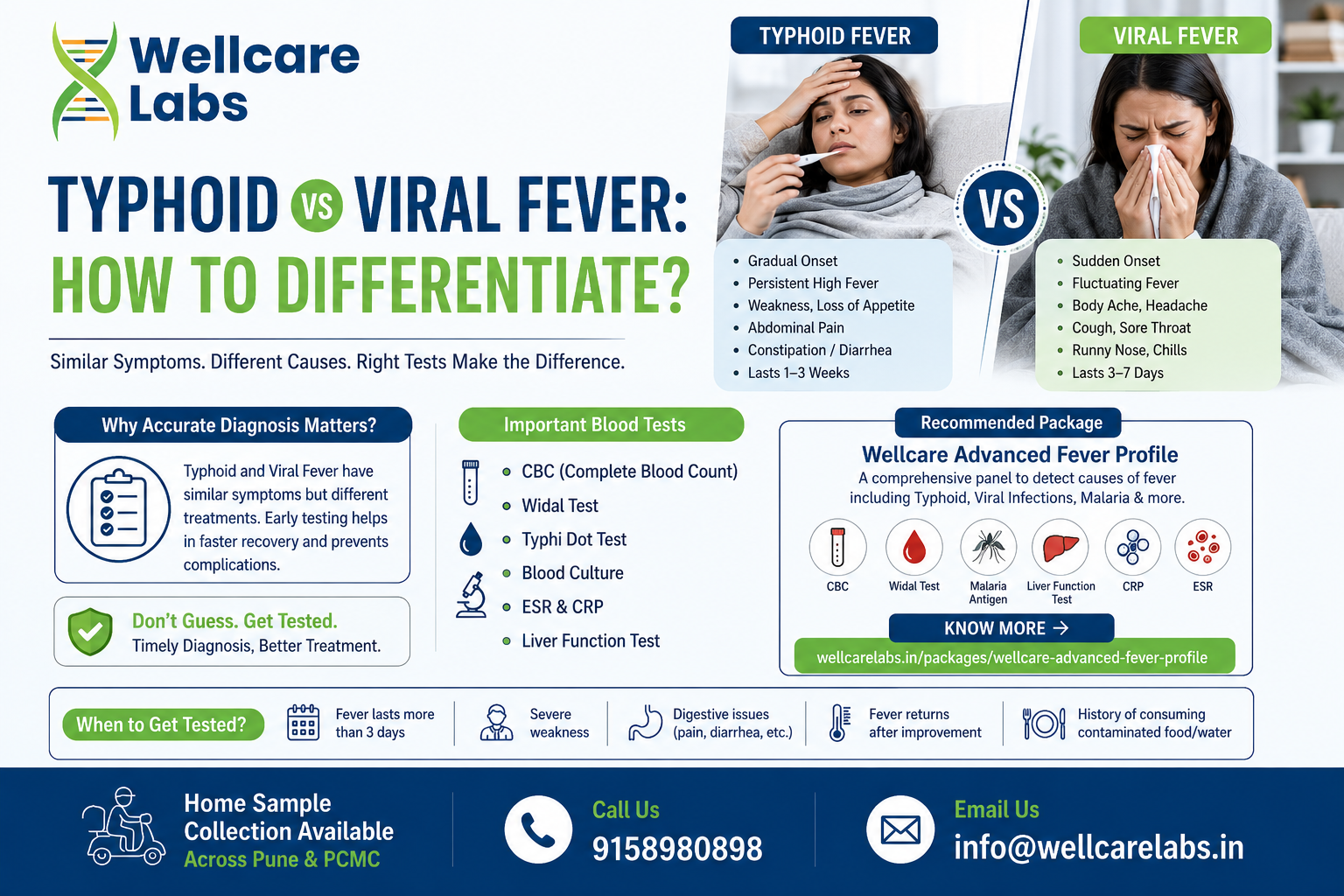
Typhoid vs Viral Fever: Key Differences
| Feature | Typhoid Fever | Viral Fever |
|---|---|---|
| Cause | Bacterial infection | Viral infection |
| Onset | Gradual | Sudden |
| Fever Pattern | Persistent and rising | Fluctuating |
| Duration | Often 1–3 weeks | Usually 3–7 days |
| Appetite | Significantly reduced | Mild reduction |
| Digestive Issues | Common | Less common |
| Treatment | Antibiotics required | Symptomatic treatment |
| Recovery Time | Longer | Shorter |
Although these differences can provide clues, symptoms alone are not enough to confirm the diagnosis.
Why Blood Tests Are Important
Typhoid and viral fever often present with overlapping symptoms. Self-diagnosis can lead to delayed treatment and unnecessary complications.
Blood tests help identify the underlying cause and allow doctors to begin appropriate treatment.
Common Tests Recommended
Complete Blood Count (CBC)
CBC helps evaluate:
- White blood cell count
- Hemoglobin levels
- Platelet count
- Signs of infection
Typhoid Testing
Doctors may recommend:
- Widal Test
- Typhi Dot Test
- Blood Culture
These tests help confirm typhoid infection.
Inflammatory Markers
Tests such as ESR and CRP can provide additional information regarding infection and inflammation.
Liver Function Tests
Some infections can affect liver function, making these tests valuable during fever evaluation.
When Should You Get Tested?
Consult a healthcare professional and consider blood testing if:
- Fever lasts more than 3 days
- Symptoms continue to worsen
- You experience severe weakness
- You have persistent digestive symptoms
- Fever returns after initial improvement
- There is a history of consuming contaminated food or water
Early testing can help avoid complications and reduce recovery time.
Advanced Fever Testing in Pune
When the exact cause of fever is unclear, doctors often recommend a comprehensive fever profile rather than individual tests.
The Wellcare Advanced Fever Profile is designed to evaluate multiple causes of fever through a detailed panel of investigations. This helps physicians differentiate between typhoid, viral infections, malaria, and other common fever-related illnesses.
Learn more about the package here:
https://wellcarelabs.in/packages/wellcare-advanced-fever-profile
A comprehensive fever profile can save valuable time by providing a broader picture of your health status instead of relying on a single test.
Tips to Prevent Typhoid and Seasonal Infections
Preventing Typhoid
- Drink purified water
- Avoid street food from unhygienic sources
- Wash hands regularly
- Maintain proper food hygiene
Preventing Viral Fever
- Practice good hand hygiene
- Avoid close contact with infected individuals
- Get adequate rest
- Maintain a healthy immune system
- Stay hydrated
Frequently Asked Questions
Can viral fever turn into typhoid?
No. Viral fever and typhoid are caused by different organisms. However, symptoms can appear similar, which is why testing is important.
Which fever usually lasts longer?
Typhoid fever generally lasts much longer than viral fever and may continue for several weeks without proper treatment.
Is CBC enough to diagnose typhoid?
No. CBC provides useful information but specific typhoid tests such as Widal, Typhi Dot, or Blood Culture may be required for confirmation.
Can I get tested at home in Pune?
Yes. Home sample collection services make it convenient to undergo fever-related blood tests without visiting a diagnostic center.
Conclusion
Distinguishing between typhoid and viral fever can be challenging because many symptoms overlap. However, understanding the differences in fever pattern, digestive symptoms, duration, and severity can help you recognize when medical attention is needed.
If fever persists or symptoms worsen, timely blood testing is the most reliable way to identify the cause and begin appropriate treatment. Early diagnosis not only speeds recovery but also helps prevent complications.
For comprehensive fever evaluation, consider the Wellcare Advanced Fever Profile and consult your healthcare provider for personalized medical advice.