Testosterone Test: When Should You Take It? A Complete Guide for Men
Testosterone Test: When Should You Take It?
Testosterone is the primary male sex hormone responsible for muscle mass, bone strength, energy levels, libido, mood, and overall well-being. While testosterone levels naturally decline with age, significantly low testosterone can affect a man's physical, mental, and sexual health.
Many men experience symptoms of low testosterone without realizing the underlying cause. A simple testosterone test can help identify hormonal imbalances early and support timely treatment if necessary.
If you have been experiencing fatigue, reduced energy, low libido, or unexplained changes in mood, it may be time to consider a testosterone test.
What Is a Testosterone Test?
A testosterone test is a blood test that measures the amount of testosterone circulating in your body.
The test may assess:
- Total Testosterone
- Free Testosterone
- Bioavailable Testosterone
These measurements help healthcare providers evaluate hormone balance and identify potential causes of symptoms related to low testosterone levels.
Why Is Testosterone Important?
Testosterone plays a crucial role in several bodily functions, including:
- Muscle growth and maintenance
- Bone density
- Sexual function and libido
- Sperm production
- Energy levels
- Mood regulation
- Cognitive function
- Fat distribution
Healthy testosterone levels are essential for maintaining overall health and vitality in men.
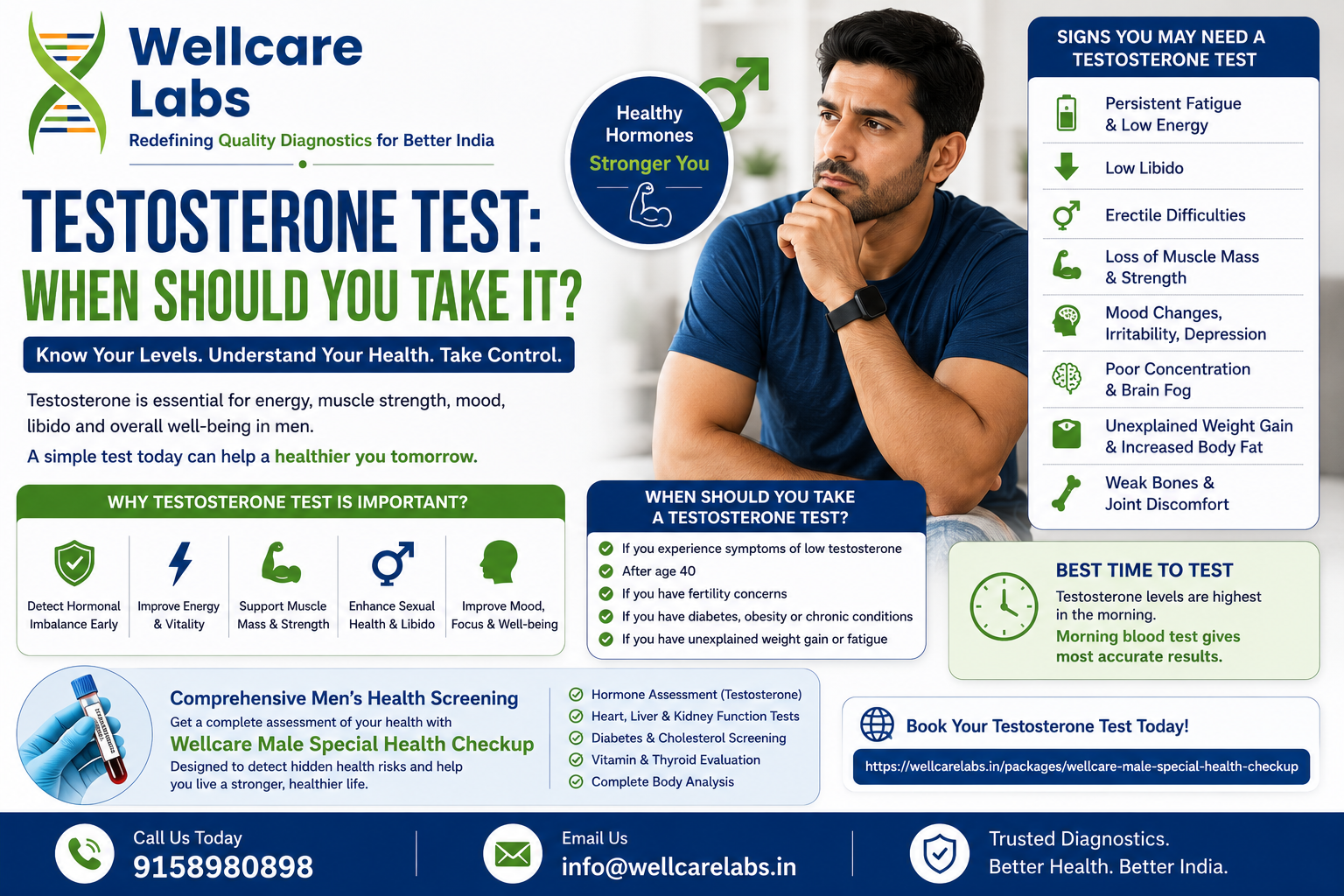
Signs You May Need a Testosterone Test
Many symptoms of low testosterone develop gradually and are often mistaken for normal aging or stress.
1. Persistent Fatigue
If you constantly feel tired despite adequate sleep and rest, low testosterone may be contributing to reduced energy production.
2. Low Sex Drive
A noticeable decrease in libido is one of the most common signs of low testosterone.
3. Erectile Difficulties
Although erectile dysfunction can have multiple causes, hormonal imbalance may be a contributing factor.
4. Loss of Muscle Mass
Testosterone helps maintain muscle strength and growth.
Low levels may result in:
- Reduced muscle mass
- Decreased physical performance
- Increased body fat
5. Mood Changes
Men with low testosterone may experience:
- Irritability
- Depression
- Anxiety
- Reduced motivation
6. Difficulty Concentrating
Some men report:
- Brain fog
- Poor focus
- Memory difficulties
These cognitive symptoms may be associated with hormonal changes.
7. Reduced Bone Strength
Long-term testosterone deficiency can contribute to reduced bone density and increased fracture risk.
When Should You Take a Testosterone Test?
If You Experience Symptoms of Low Testosterone
Testing is recommended when symptoms begin affecting your quality of life.
After Age 40
Testosterone levels naturally decline with age.
Men over 40 may benefit from periodic health screening, especially if symptoms are present.
If You Have Fertility Concerns
Testosterone plays an important role in sperm production and reproductive health.
If You Have Chronic Health Conditions
Conditions such as:
- Obesity
- Diabetes
- Metabolic syndrome
- Sleep apnea
may affect testosterone levels.
If You Have Unexplained Weight Gain
Hormonal imbalance may contribute to increased body fat and difficulty maintaining a healthy weight.
What Is the Best Time to Take a Testosterone Test?
Testosterone levels fluctuate throughout the day.
For the most accurate results, testing is generally recommended during the morning hours when testosterone levels are typically highest.
Your healthcare provider may recommend repeat testing if results are borderline or inconsistent with symptoms.
What Causes Low Testosterone?
Several factors can contribute to low testosterone levels:
Aging
Natural testosterone production gradually decreases with age.
Obesity
Excess body fat may negatively impact hormone production.
Diabetes
Men with diabetes have a higher risk of testosterone deficiency.
Chronic Stress
Long-term stress can affect hormone balance.
Sleep Disorders
Poor sleep quality and sleep apnea may reduce testosterone production.
Certain Medications
Some medications may interfere with hormone levels.
What Other Tests Are Often Recommended?
A testosterone test is frequently performed alongside other health assessments to gain a complete understanding of overall health.
These may include:
Complete Blood Count (CBC)
Evaluates overall blood health.
Blood Sugar Testing
Screens for diabetes and insulin resistance.
Lipid Profile
Assesses cholesterol levels and cardiovascular risk.
Liver Function Tests
Evaluates liver health.
Kidney Function Tests
Monitors kidney performance.
Thyroid Function Tests
Rules out thyroid disorders that may mimic low testosterone symptoms.
Comprehensive Men's Health Screening
Low testosterone can sometimes be linked to underlying health conditions such as diabetes, obesity, thyroid disorders, or metabolic syndrome.
For a broader understanding of your health, consider a comprehensive men's health assessment.
Explore the Wellcare Male Special Health Checkup:
https://wellcarelabs.in/packages/wellcare-male-special-health-checkup
This package is designed to evaluate multiple aspects of men's health, helping identify risk factors early and supporting proactive healthcare decisions.
Benefits of Early Testosterone Testing
Early testing can help:
- Identify hormonal imbalances
- Improve energy levels
- Support sexual health
- Enhance physical performance
- Improve mood and mental well-being
- Detect underlying medical conditions
The sooner hormonal issues are identified, the easier they are to manage effectively.
Testosterone Testing in Pune, PCMC & Maharashtra
Men across Pune, Pimpri-Chinchwad (PCMC), and Maharashtra are becoming increasingly aware of the importance of preventive healthcare and hormone testing.
Regular health screening and timely testosterone evaluation can help men maintain optimal health, improve quality of life, and reduce the risk of age-related health concerns.
Frequently Asked Questions
At what age should men check testosterone levels?
Men experiencing symptoms or those over the age of 40 may benefit from testosterone evaluation as part of routine health screening.
Can low testosterone cause fatigue?
Yes. Persistent fatigue is one of the most commonly reported symptoms of testosterone deficiency.
Does low testosterone affect muscle growth?
Testosterone plays an important role in muscle maintenance and development. Low levels may contribute to reduced muscle mass.
Can testosterone levels be improved?
Depending on the underlying cause, lifestyle modifications and medical treatment may help improve testosterone levels.
Conclusion
Testosterone is essential for maintaining energy, strength, mood, sexual health, and overall well-being. Symptoms such as fatigue, low libido, mood changes, and reduced muscle mass should not be ignored.
A testosterone test can provide valuable insights into your hormonal health and help identify underlying conditions before they become more serious.
If you're experiencing symptoms or want a complete evaluation of your health, consider a comprehensive men's health screening with the Wellcare Male Special Health Checkup.
Wellcare Labs
Redefining Quality Diagnostics for Better India