Platelet Count in Dengue: Normal Range, Warning Signs & Blood Tests
Platelet Count in Dengue: What You Should Know
Introduction
Dengue fever is one of the most common mosquito-borne illnesses during the monsoon season in Maharashtra. One of the biggest concerns among patients diagnosed with dengue is their platelet count.
Many people panic when they hear that their platelet count is dropping. However, understanding what platelets are, why they decrease during dengue, and when medical attention is necessary can help reduce anxiety and ensure proper care.
In this guide, we'll explain everything you need to know about platelet count in dengue, warning signs to watch for, and the blood tests that help doctors monitor recovery.
What Are Platelets?
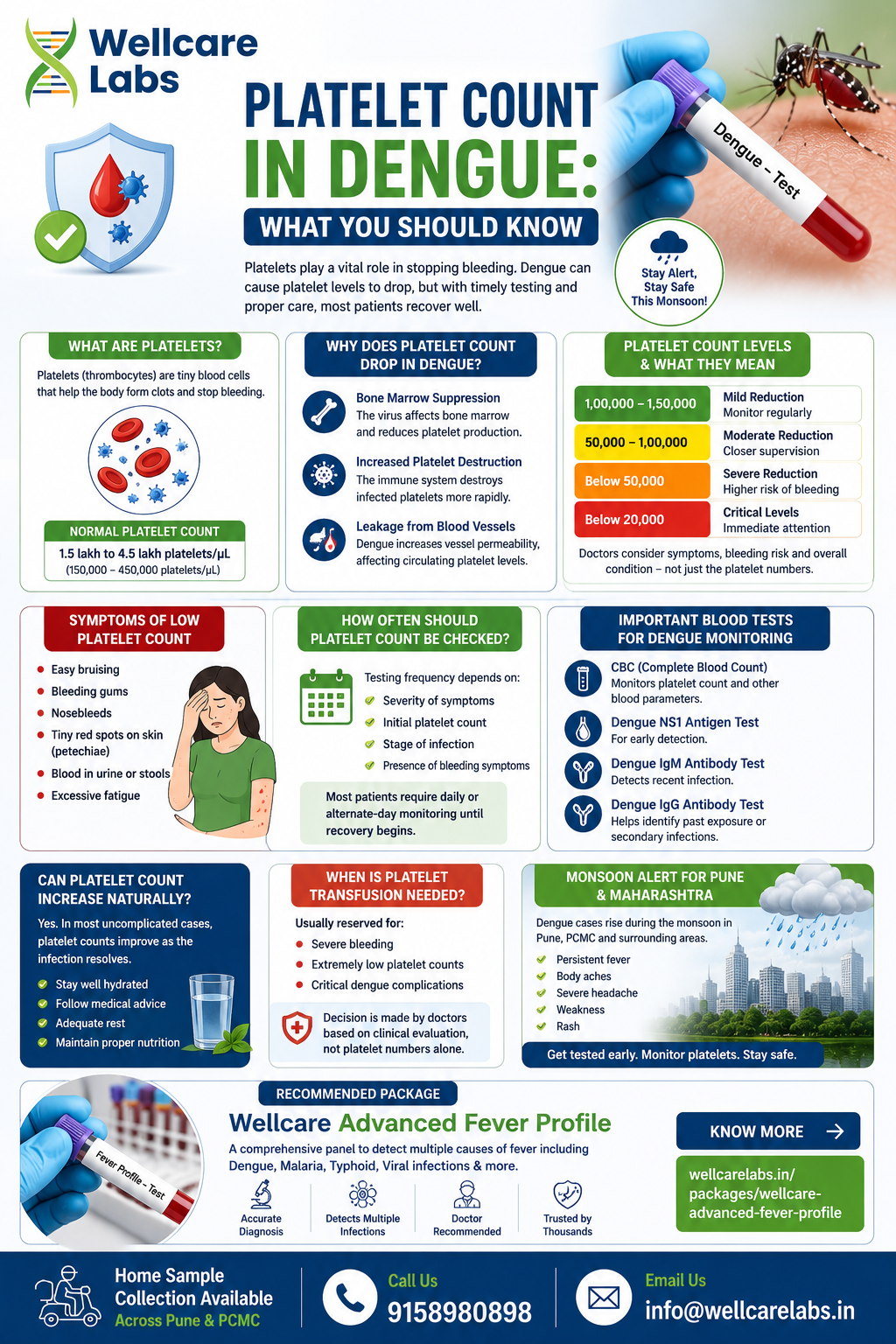
Platelets, also known as thrombocytes, are tiny blood cells that help the body form clots and stop bleeding.
Whenever you get a cut or injury, platelets gather at the site and help prevent excessive blood loss.
Normal Platelet Count
A healthy platelet count generally ranges between:
1.5 lakh to 4.5 lakh platelets per microliter of blood
(150,000–450,000 platelets/μL)
Values may vary slightly depending on the laboratory and testing methods used.
Why Does Platelet Count Drop in Dengue?
The dengue virus affects the body's ability to produce and maintain healthy platelets.
Several factors contribute to platelet reduction:
Bone Marrow Suppression
The virus temporarily affects bone marrow function, reducing platelet production.
Increased Platelet Destruction
The immune system may destroy infected platelets more rapidly.
Leakage from Blood Vessels
Dengue can increase blood vessel permeability, affecting circulating platelet levels.
As a result, platelet counts often begin to decline during the course of infection.
What Platelet Count is Considered Dangerous?
Not every drop in platelet count is dangerous.
Mild Reduction
1,00,000 – 1,50,000
Usually monitored with regular blood tests.
Moderate Reduction
50,000 – 1,00,000
Requires closer medical supervision.
Severe Reduction
Below 50,000
Higher risk of bleeding complications.
Critical Levels
Below 20,000
Immediate medical evaluation is required.
However, doctors do not rely solely on platelet count. They also assess symptoms, bleeding risk, hydration status, and overall clinical condition.
Symptoms Associated with Low Platelet Count
Patients with significantly reduced platelet counts may experience:
- Easy bruising
- Bleeding gums
- Nosebleeds
- Tiny red spots on the skin (petechiae)
- Blood in urine
- Blood in stools
- Excessive fatigue
Seek medical attention immediately if any bleeding symptoms occur.
How Often Should Platelet Count Be Checked?
Doctors may recommend monitoring platelet levels regularly during dengue infection.
Testing frequency depends on:
- Severity of symptoms
- Initial platelet count
- Stage of infection
- Presence of bleeding symptoms
Many patients require daily or alternate-day monitoring until recovery begins.
Important Blood Tests for Dengue Monitoring
Complete Blood Count (CBC)
CBC is the most important test for monitoring platelet levels and other blood parameters.
It helps assess:
- Platelet count
- White blood cell count
- Hemoglobin levels
- Hematocrit
Dengue NS1 Antigen Test
Used for early detection of dengue infection.
Dengue IgM Antibody Test
Helps identify recent infection.
Dengue IgG Antibody Test
Assists in evaluating previous exposure and secondary infections.
Regular monitoring through blood tests allows doctors to track disease progression and recovery.
Can Platelet Count Increase Naturally?
Yes.
In most uncomplicated dengue cases, platelet counts gradually improve as the infection resolves.
Helpful recovery measures include:
- Staying well hydrated
- Following medical advice
- Adequate rest
- Maintaining proper nutrition
There is limited scientific evidence that specific foods alone can rapidly increase platelet counts. Recovery primarily depends on the body's healing process.
When is Platelet Transfusion Needed?
Many patients mistakenly believe platelet transfusion is required whenever platelet counts fall.
In reality, platelet transfusions are usually reserved for:
- Severe bleeding
- Extremely low platelet counts
- Critical dengue complications
The decision is made by healthcare professionals based on clinical evaluation rather than platelet numbers alone.
Dengue Monitoring During Monsoon in Pune
Dengue cases typically increase during the monsoon season in Pune, PCMC, Wakad, Baner, Hinjawadi, Aundh, Kharadi, Ravet, and surrounding areas.
If you develop:
- Persistent fever
- Body aches
- Severe headache
- Weakness
- Rash
Early blood testing can help detect dengue and monitor platelet trends before complications develop.
Recommended Fever Testing Package
When dengue is suspected, doctors often recommend a comprehensive fever evaluation to rule out other infections such as malaria, typhoid, and viral fever.
The Wellcare Advanced Fever Profile helps assess multiple causes of fever through a comprehensive panel of diagnostic tests, making it particularly useful during the monsoon season.
Learn more here:
https://wellcarelabs.in/packages/wellcare-advanced-fever-profile
The package supports timely diagnosis and helps physicians make informed treatment decisions.
Frequently Asked Questions
What is the normal platelet count in dengue?
There is no special "dengue platelet count." Normal platelet levels remain between 1.5 lakh and 4.5 lakh per microliter of blood.
Does every dengue patient develop low platelets?
No. Some patients experience only mild reductions, while others maintain near-normal platelet levels throughout the illness.
Can platelet count recover without transfusion?
Yes. Most dengue patients recover naturally with proper medical care and monitoring.
Which test checks platelet count?
A Complete Blood Count (CBC) is used to measure platelet levels.
Is a platelet count below 1 lakh dangerous?
Not necessarily. Doctors consider symptoms, bleeding risk, and overall health rather than platelet numbers alone.
Conclusion
A falling platelet count is one of the most closely monitored aspects of dengue infection, but it should not automatically cause panic. Most patients recover successfully with proper medical supervision, hydration, and regular blood testing.
The key is early diagnosis, consistent monitoring, and timely medical care. If you experience symptoms of dengue during the monsoon season, consult a healthcare professional and undergo appropriate blood testing to ensure safe recovery.