Monsoon Diseases in Maharashtra
Monsoon Diseases in Maharashtra: Symptoms, Prevention & Essential Blood Tests
Introduction
The monsoon season brings much-needed relief from the summer heat across Maharashtra. However, it also creates favorable conditions for the spread of various infectious diseases. Increased humidity, waterlogging, mosquito breeding, and contaminated food and water contribute to a rise in illnesses during the rainy season.
Every year, hospitals and diagnostic centers across Pune, Mumbai, Nashik, Nagpur, Thane, and other cities witness a significant increase in cases of dengue, malaria, typhoid, viral fever, and gastrointestinal infections.
Understanding common monsoon diseases, recognizing their symptoms, and getting timely diagnostic testing can help prevent complications and ensure faster recovery.
Why Do Diseases Increase During Monsoon?
Several factors contribute to the spread of infections during the rainy season:
- Stagnant water encourages mosquito breeding.
- Contaminated drinking water spreads bacterial infections.
- Increased humidity supports the growth of harmful microorganisms.
- Street food contamination becomes more common.
- Reduced immunity due to seasonal changes.
These conditions make monsoon one of the highest-risk seasons for infectious diseases in Maharashtra.
Common Monsoon Diseases in Maharashtra
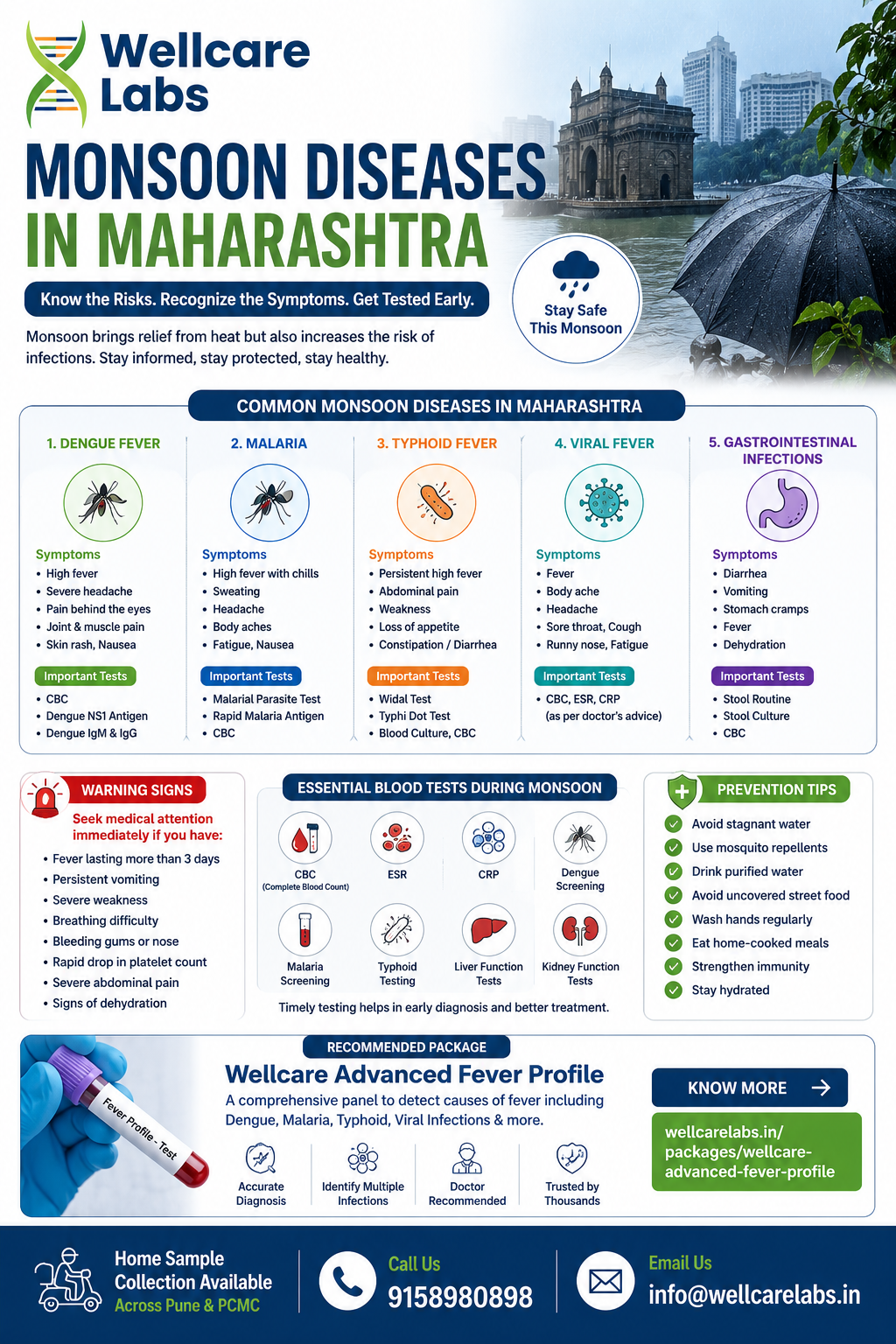
1. Dengue Fever
Dengue is a mosquito-borne viral infection transmitted through Aedes mosquitoes.
Common Symptoms
- High fever
- Severe headache
- Pain behind the eyes
- Joint and muscle pain
- Skin rash
- Nausea and vomiting
- Low platelet count
Important Tests
- CBC (Complete Blood Count)
- Dengue NS1 Antigen
- Dengue IgM Antibody
- Dengue IgG Antibody
2. Malaria
Malaria spreads through infected Anopheles mosquitoes and remains a concern in many parts of Maharashtra during monsoon.
Symptoms
- High fever with chills
- Sweating
- Headache
- Body aches
- Fatigue
- Nausea
Important Tests
- Malarial Parasite Test
- Rapid Malaria Antigen Test
- CBC
3. Typhoid Fever
Typhoid is a bacterial infection caused by Salmonella Typhi and is commonly spread through contaminated food and water.
Symptoms
- Persistent high fever
- Abdominal pain
- Weakness
- Loss of appetite
- Constipation or diarrhea
- Headache
Important Tests
- Widal Test
- Typhi Dot Test
- Blood Culture
- CBC
4. Viral Fever
Viral fever cases typically increase during seasonal transitions and periods of high humidity.
Symptoms
- Fever
- Body ache
- Headache
- Sore throat
- Cough
- Runny nose
- Fatigue
While many viral infections resolve on their own, blood testing may be required if symptoms persist or worsen.
5. Gastrointestinal Infections
Contaminated food and water can lead to digestive infections during monsoon.
Symptoms
- Diarrhea
- Vomiting
- Stomach cramps
- Fever
- Dehydration
Prompt medical attention is recommended, especially for children and elderly individuals.
Warning Signs You Should Not Ignore
Seek medical attention immediately if you experience:
- Fever lasting more than 3 days
- Persistent vomiting
- Severe weakness
- Breathing difficulty
- Bleeding gums or nose
- Rapid drop in platelet count
- Severe abdominal pain
- Signs of dehydration
Early diagnosis can significantly improve treatment outcomes.
Essential Blood Tests During Monsoon
Doctors often recommend comprehensive blood investigations when the exact cause of fever is unclear.
Common Fever Investigations Include:
- CBC (Complete Blood Count)
- ESR
- CRP
- Dengue Screening
- Malaria Screening
- Typhoid Testing
- Liver Function Tests
- Kidney Function Tests
These tests help identify infections early and guide appropriate treatment.
Comprehensive Fever Testing with Wellcare Labs
Since symptoms of dengue, malaria, typhoid, and viral fever often overlap, a comprehensive fever profile can help doctors identify the exact cause quickly.
The Wellcare Advanced Fever Profile is designed to evaluate multiple causes of fever through a detailed panel of diagnostic tests. It helps physicians differentiate between common monsoon illnesses and make informed treatment decisions.
Learn more here:
https://wellcarelabs.in/packages/wellcare-advanced-fever-profile
The package is particularly useful during Maharashtra's monsoon season when fever-related illnesses tend to increase significantly.
How to Protect Yourself During Monsoon
Prevent Mosquito-Borne Diseases
- Avoid stagnant water around your home.
- Use mosquito repellents.
- Wear full-sleeved clothing.
- Install window screens where possible.
Prevent Food & Water-Borne Diseases
- Drink purified water.
- Avoid uncovered street food.
- Wash fruits and vegetables thoroughly.
- Maintain proper hand hygiene.
Strengthen Immunity
- Eat a balanced diet.
- Stay hydrated.
- Get adequate sleep.
- Exercise regularly.
Frequently Asked Questions
Which disease is most common during monsoon in Maharashtra?
Dengue, malaria, typhoid, and viral fever are among the most commonly reported monsoon illnesses.
When should I get a blood test for fever?
If fever lasts more than 2–3 days or is accompanied by severe symptoms, blood testing is recommended.
Can symptoms of dengue, malaria, and typhoid look similar?
Yes. Many monsoon illnesses share similar symptoms, making laboratory testing essential for accurate diagnosis.
Is home sample collection available in Pune?
Yes. Wellcare Labs offers convenient home sample collection services across Pune and PCMC.
Conclusion
Monsoon season in Maharashtra brings an increased risk of infectious diseases, particularly mosquito-borne and water-borne illnesses. Recognizing symptoms early and undergoing timely diagnostic testing can help prevent serious complications.
If you or your family members develop persistent fever during the rainy season, don't rely on guesswork. Early diagnosis through appropriate blood tests can ensure faster recovery and peace of mind.
Stay vigilant, stay protected, and prioritize your health this monsoon.