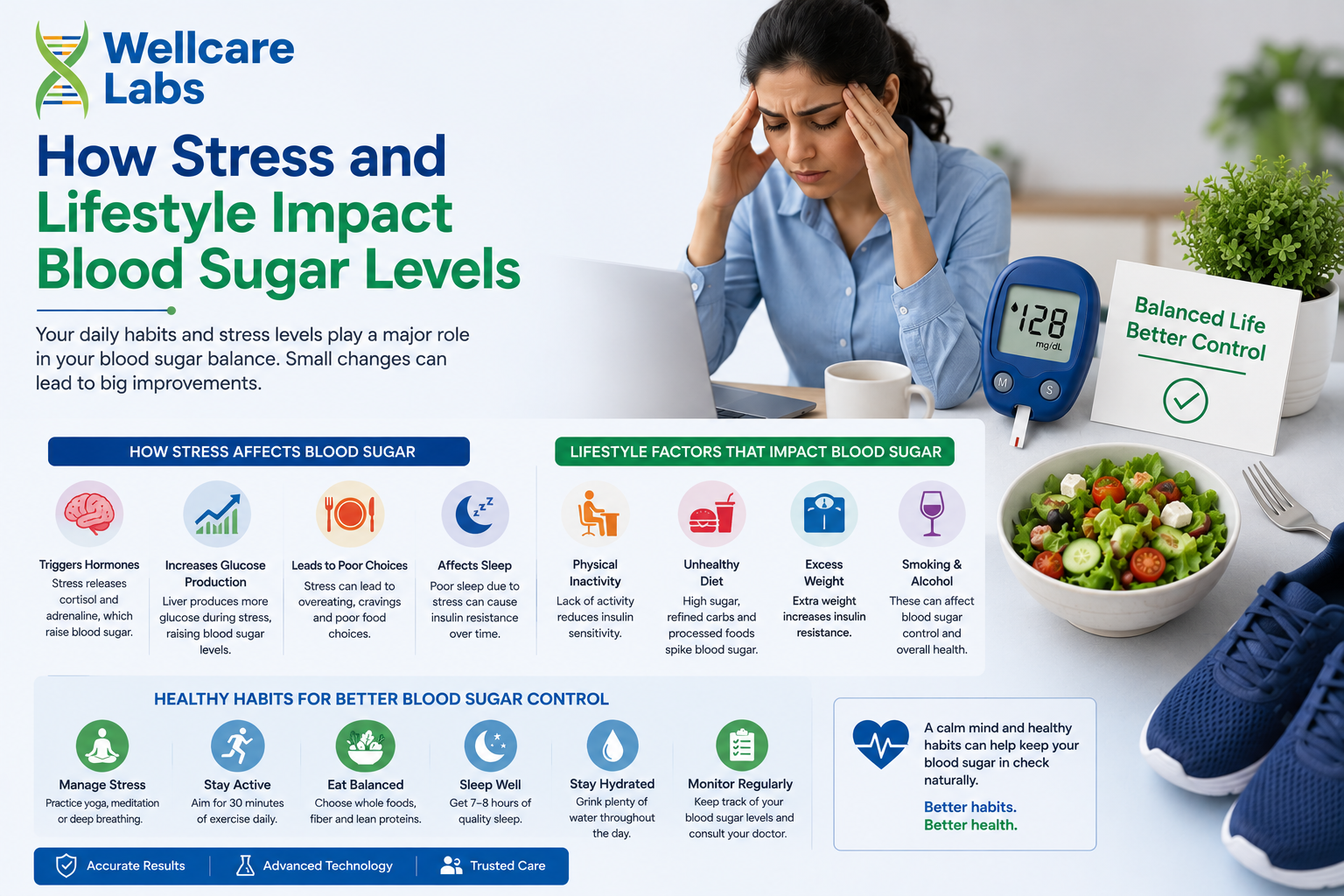
How Stress and Lifestyle Impact Blood Sugar Levels
How Stress and Lifestyle Impact Blood Sugar Levels
Modern lifestyles have changed significantly over the years. Long working hours, irregular eating habits, lack of physical activity, poor sleep, and constant stress have become common parts of daily life. While these habits may seem normal, they can silently affect blood sugar levels and overall health.
Many people associate high blood sugar only with diabetes, but stress and unhealthy lifestyle choices can also play a major role in glucose imbalance.
Understanding how these factors affect the body can help individuals make healthier decisions and reduce long-term health risks.
What Are Blood Sugar Levels?
Blood sugar, also known as blood glucose, refers to the amount of sugar present in the bloodstream.
The body uses glucose for energy, and insulin helps move sugar from the blood into cells. When this balance gets disturbed, blood sugar levels may rise or fall abnormally.
Consistently high blood sugar levels can increase the risk of:
- Diabetes
- Heart disease
- Kidney problems
- Nerve damage
- Vision issues
This is why maintaining stable blood sugar levels is extremely important.
How Stress Affects Blood Sugar Levels
Stress affects the body both mentally and physically.
When a person experiences stress, the body releases hormones such as:
- Cortisol
- Adrenaline
These hormones prepare the body to respond to stressful situations by increasing glucose release into the bloodstream for extra energy.
While this response is normal temporarily, chronic stress can lead to:
- Increased blood sugar levels
- Insulin resistance
- Unhealthy eating habits
- Poor sleep patterns
Long-term stress may make blood sugar management more difficult, especially for people with diabetes.
Emotional Stress and Unhealthy Habits
Stress often influences daily lifestyle choices.
Many people under stress may:
- Eat more sugary or processed foods
- Skip meals
- Exercise less
- Sleep poorly
- Consume excess caffeine or alcohol
These habits can further increase glucose imbalance and negatively impact overall health.
How Poor Diet Impacts Blood Sugar
Food plays a major role in regulating glucose levels.
Frequent consumption of:
- Sugary drinks
- Refined carbohydrates
- Fast food
- Processed snacks
can cause rapid blood sugar spikes.
Over time, unhealthy eating patterns may contribute to:
- Weight gain
- Insulin resistance
- Increased diabetes risk
Balanced nutrition is essential for maintaining healthy glucose control.
Lack of Physical Activity and Blood Sugar
Physical inactivity reduces the body’s ability to use insulin efficiently.
A sedentary lifestyle may lead to:
- Higher blood sugar levels
- Weight gain
- Slower metabolism
- Increased risk of Type 2 diabetes
Regular exercise helps muscles absorb glucose more effectively and improves insulin sensitivity naturally.
Sleep and Blood Sugar Connection
Poor sleep quality can directly affect blood sugar regulation.
Lack of sleep may:
- Increase stress hormones
- Affect appetite control
- Increase sugar cravings
- Reduce insulin sensitivity
People who regularly sleep less than recommended may have a higher risk of developing metabolic disorders.
Weight Gain and Insulin Resistance
Unhealthy lifestyle habits often contribute to excess body weight, especially abdominal fat.
This can increase insulin resistance, where the body struggles to use insulin properly.
As insulin resistance worsens:
- Blood sugar levels rise
- Diabetes risk increases
- Energy levels decrease
Healthy weight management is important for long-term blood sugar control.
Signs That Stress and Lifestyle May Be Affecting Blood Sugar
Common symptoms may include:
- Constant fatigue
- Increased thirst
- Frequent urination
- Difficulty concentrating
- Mood swings
- Sudden hunger cravings
- Weight changes
If these symptoms occur regularly, blood sugar testing may be necessary.
Healthy Lifestyle Habits That Support Blood Sugar Control
Simple lifestyle changes can make a significant difference.
Helpful Habits Include:
- Eating balanced meals
- Exercising regularly
- Sleeping 7–8 hours daily
- Managing stress effectively
- Staying hydrated
- Reducing processed sugar intake
- Avoiding smoking and excessive alcohol
Consistency is more important than extreme changes.
Stress Management Techniques That Can Help
Managing stress can improve both mental and physical health.
Useful Stress-Relief Activities:
- Meditation
- Yoga
- Deep breathing exercises
- Walking outdoors
- Listening to music
- Spending time with family and friends
Even small relaxation practices can help regulate stress hormones.
Importance of Regular Blood Sugar Testing
Routine health testing helps identify glucose imbalance early before complications develop.
Regular testing is especially important for:
- People with family history of diabetes
- Working professionals with stressful lifestyles
- Individuals with obesity or sedentary habits
- People experiencing diabetes symptoms
Preventive testing supports better long-term health management.
Why Choosing a Reliable Diagnostic Lab Matters
Accurate blood sugar testing is essential for proper diagnosis and treatment planning.
Wellcare Labs offers dependable pathology and diagnostic services with advanced testing methods, experienced professionals, and timely reporting. Their focus on precision and patient care helps individuals monitor their health confidently and make informed healthcare decisions.
Final Thoughts
Stress and unhealthy lifestyle habits can significantly affect blood sugar levels, even before diabetes develops.
Modern routines often make it difficult to prioritize health, but small daily improvements can have a major long-term impact. Managing stress, eating healthier, staying active, and getting regular health checkups are some of the most effective ways to maintain balanced blood sugar levels naturally.
Taking preventive care seriously today can help reduce health complications in the future.