How Obesity Increases the Risk of Diabetes and Heart Disease
How Obesity Increases the Risk of Diabetes and Heart Disease
Obesity has become one of the most common health concerns worldwide due to changing lifestyles, unhealthy eating habits, stress, and lack of physical activity. While many people consider weight gain only a cosmetic issue, obesity can seriously affect overall health and increase the risk of several chronic diseases.
Two of the most common health conditions strongly linked to obesity are diabetes and heart disease.
Excess body weight can slowly affect blood sugar control, blood pressure, cholesterol levels, and heart function often without noticeable symptoms during the early stages.
Understanding this connection is important for prevention, early diagnosis, and healthier long-term living.
What is Obesity?
Obesity refers to excessive body fat accumulation that may negatively affect health.
It is commonly measured using:
- Body Mass Index (BMI)
- Waist circumference
- Body fat percentage
Obesity is usually caused by a combination of:
- Poor diet
- Lack of exercise
- Stress
- Genetics
- Hormonal imbalance
- Sedentary lifestyle
If not managed properly, obesity can increase the risk of serious medical conditions.
How Obesity Affects the Body
Excess body fat places additional strain on multiple organs and body systems.
Obesity may affect:
- Blood sugar regulation
- Heart function
- Blood circulation
- Hormonal balance
- Kidney function
- Joint health
Over time, these changes may lead to chronic health complications.
Obesity and Diabetes Connection
What is Diabetes?
Diabetes occurs when the body cannot properly regulate blood sugar levels.
Type 2 diabetes is the form most strongly associated with obesity and lifestyle habits.
How Obesity Increases Diabetes Risk
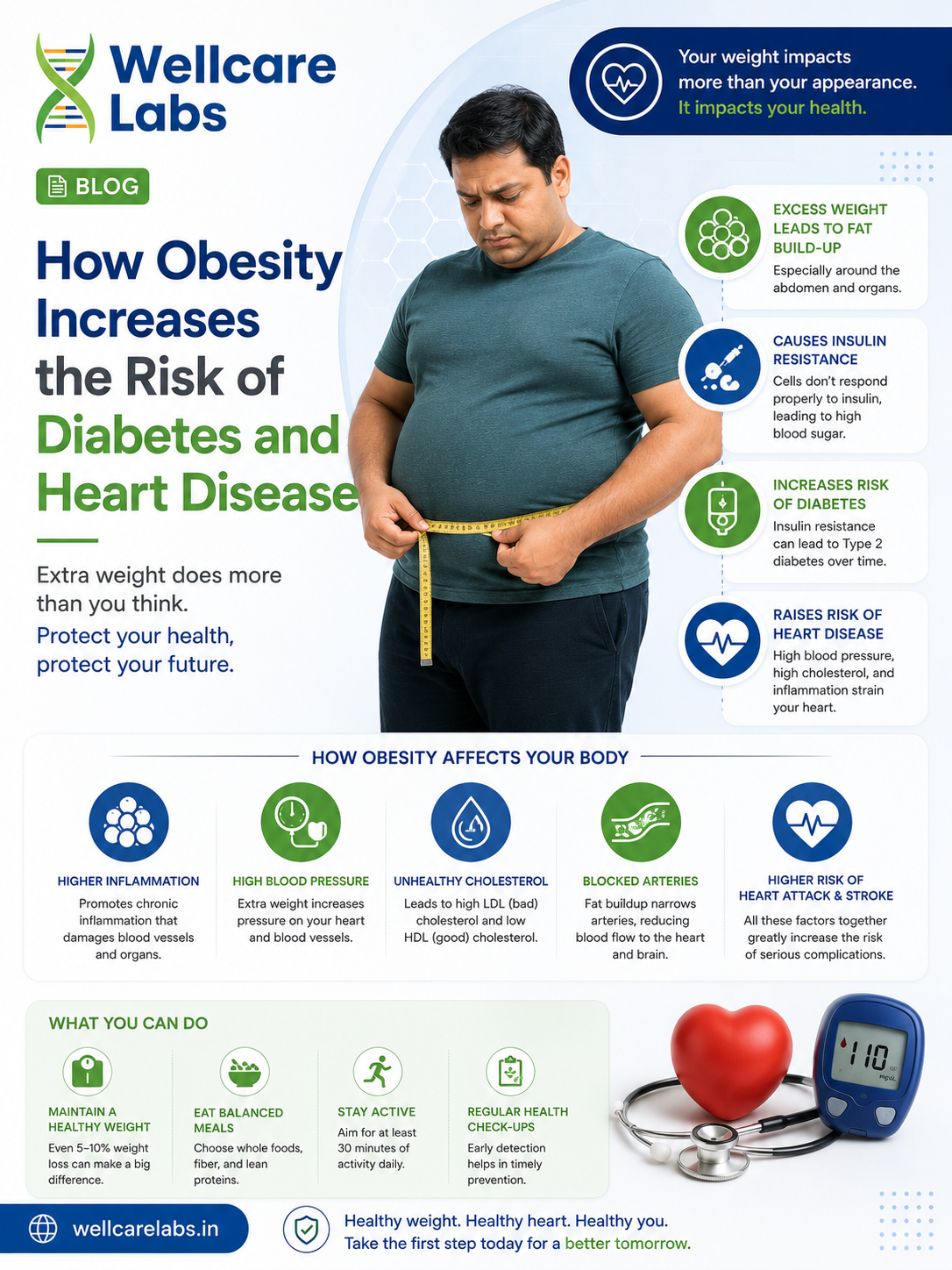
Excess fat, especially around the abdomen, can cause insulin resistance.
Insulin resistance means:
- The body’s cells stop responding properly to insulin
- Glucose remains in the bloodstream instead of entering cells
- Blood sugar levels rise abnormally
Over time, this can lead to prediabetes and eventually Type 2 diabetes.
Common Symptoms of High Blood Sugar
People at risk may experience:
- Frequent urination
- Excessive thirst
- Fatigue
- Blurred vision
- Slow wound healing
- Sudden hunger cravings
Routine blood sugar testing helps detect these problems early.
Obesity and Heart Disease Connection
How Obesity Affects Heart Health
Obesity significantly increases cardiovascular risk because it can contribute to:
- High blood pressure
- High cholesterol
- Poor blood circulation
- Inflammation
- Increased workload on the heart
These factors may eventually lead to heart disease or stroke.
High Cholesterol and Obesity
People with obesity often develop unhealthy cholesterol levels.
This may include:
- Increased LDL (bad cholesterol)
- High triglycerides
- Reduced HDL (good cholesterol)
Excess cholesterol can build up inside arteries and restrict blood flow to the heart.
High Blood Pressure Risk
Excess weight forces the heart to work harder to circulate blood throughout the body.
This may increase blood pressure and raise the risk of:
- Heart attack
- Stroke
- Heart failure
Many people with hypertension do not notice symptoms initially.
Lifestyle Factors That Contribute to Obesity
Several modern lifestyle habits increase obesity risk.
Common Factors Include:
- Processed food consumption
- Sugary beverages
- Physical inactivity
- Stress eating
- Poor sleep patterns
- Long working hours
These habits can also worsen blood sugar and heart health over time.
Why Abdominal Fat is More Dangerous
Fat stored around the abdominal area is considered more harmful than fat in other parts of the body.
Abdominal obesity is strongly linked to:
- Insulin resistance
- Metabolic syndrome
- Cardiovascular disease
Waist circumference is often an important health indicator alongside body weight.
Can Obesity-Related Risks Be Reduced?
Yes, healthy lifestyle changes can significantly reduce the risk of diabetes and heart disease.
Helpful Lifestyle Improvements:
- Regular exercise
- Balanced nutrition
- Weight management
- Better sleep habits
- Stress reduction
- Limiting processed sugar and unhealthy fats
Even moderate weight loss can improve blood sugar control and heart health.
Importance of Routine Health Screening
Regular health checkups help monitor:
- Blood sugar levels
- Cholesterol levels
- Blood pressure
- Heart health
- Liver and kidney function
Preventive screening helps identify early warning signs before complications become serious.
Who Should Prioritize Health Screening?
Routine testing becomes especially important for:
- Adults above 30 years
- Individuals with obesity or sedentary lifestyles
- People with family history of diabetes or heart disease
- Individuals with high stress levels
- Smokers and alcohol consumers
Early detection supports better disease management and prevention.
Importance of Choosing a Reliable Diagnostic Lab
Accurate testing plays an important role in monitoring obesity-related health risks.
Wellcare Labs offers dependable pathology and diagnostic services with advanced technology, experienced professionals, and quality-focused testing processes. Their commitment to precision and timely reporting helps individuals make informed healthcare decisions and monitor their health with confidence.
Final Thoughts
Obesity is much more than a weight-related concern — it is a major risk factor for diabetes, heart disease, and several long-term health complications.
The good news is that early lifestyle changes, routine health screening, and preventive care can significantly reduce these risks. Healthy eating habits, regular exercise, stress management, and timely medical monitoring are important steps toward better long-term health and overall well-being.