How Blood Tests Help Monitor Liver and Kidney Function
How Blood Tests Help Monitor Liver and Kidney Function
The liver and kidneys are two of the most important organs in the human body. They work continuously to remove toxins, process nutrients, regulate fluids, and support several essential body functions.
However, liver and kidney problems often develop silently in the early stages without noticeable symptoms. By the time symptoms appear, significant damage may already have occurred.
This is why routine blood testing plays a major role in monitoring liver and kidney health.
Blood tests help doctors evaluate how well these organs are functioning and identify abnormalities before serious complications develop.
Why Liver and Kidney Health is Important
The Liver Helps:
- Process nutrients
- Remove toxins from the blood
- Support digestion
- Produce important proteins
- Regulate metabolism
The Kidneys Help:
- Filter waste from the blood
- Balance fluids and electrolytes
- Control blood pressure
- Support red blood cell production
When these organs are not functioning properly, overall health can be affected significantly.
How Blood Tests Help Detect Organ Problems
Blood tests measure specific enzymes, proteins, minerals, and waste products in the bloodstream.
Abnormal levels may indicate:
- Inflammation
- Infection
- Organ stress
- Reduced organ function
- Early disease progression
Routine testing allows doctors to identify potential issues early and begin timely treatment.
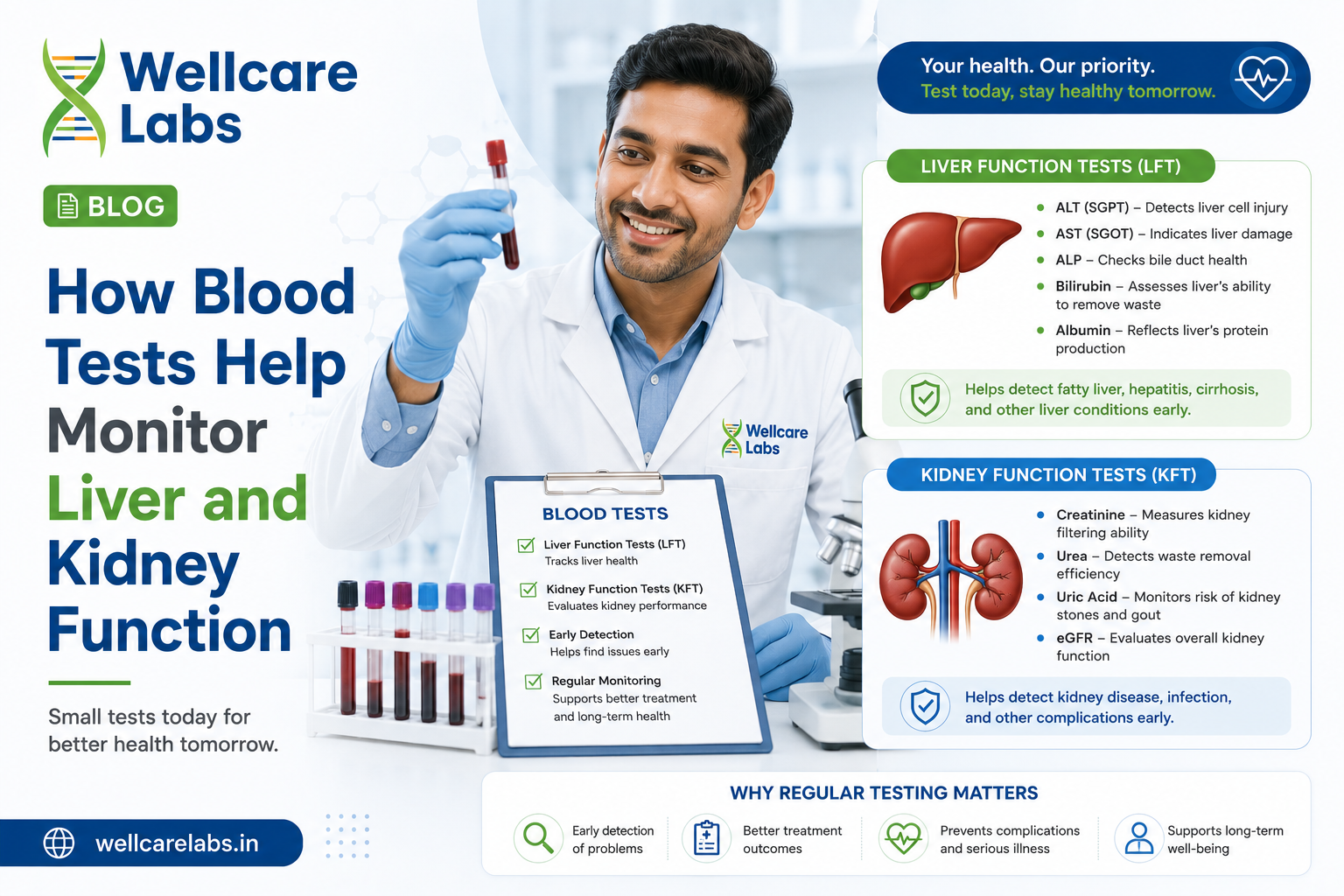
Blood Tests That Monitor Liver Function
1. Liver Function Test (LFT)
A Liver Function Test is one of the most common investigations used to assess liver health.
It measures:
- Liver enzymes
- Proteins
- Bilirubin levels
The test helps detect:
- Fatty liver disease
- Hepatitis
- Liver inflammation
- Alcohol-related liver damage
- Medication-related liver stress
2. ALT and AST Enzymes
ALT (Alanine Aminotransferase) and AST (Aspartate Aminotransferase) are enzymes found inside liver cells.
High Levels May Indicate:
- Liver injury
- Inflammation
- Viral hepatitis
- Fatty liver disease
Elevated enzyme levels often signal liver stress even before symptoms appear.
3. Bilirubin Test
Bilirubin is a waste product produced during red blood cell breakdown.
High bilirubin levels may cause:
- Jaundice
- Yellowing of skin and eyes
- Liver dysfunction
This test helps evaluate liver processing ability.
4. Albumin and Protein Tests
The liver produces important proteins like albumin.
Low protein levels may suggest:
- Liver disease
- Poor liver function
- Nutritional problems
Blood Tests That Monitor Kidney Function
1. Creatinine Test
Creatinine is a waste product filtered by the kidneys.
High Creatinine Levels May Indicate:
- Reduced kidney function
- Kidney disease
- Dehydration
- Urinary blockage
It is one of the most important kidney function markers.
2. Blood Urea Nitrogen (BUN) Test
The BUN test measures nitrogen waste in the blood.
Abnormal levels may suggest:
- Kidney dysfunction
- Dehydration
- High protein breakdown
Doctors often evaluate BUN along with creatinine for better assessment.
3. Estimated Glomerular Filtration Rate (eGFR)
eGFR estimates how efficiently the kidneys filter blood.
Lower eGFR values may indicate:
- Chronic kidney disease
- Reduced kidney function
This test helps assess kidney performance over time.
4. Electrolyte Tests
Kidneys help maintain electrolyte balance in the body.
Blood tests monitor:
- Sodium
- Potassium
- Chloride
- Bicarbonate
Abnormal electrolyte levels may occur due to kidney disorders.
Common Causes of Liver and Kidney Problems
Several lifestyle and medical factors can affect these organs.
Common Causes Include:
- Diabetes
- High blood pressure
- Obesity
- Excess alcohol consumption
- Viral infections
- Poor diet
- Certain medications
- Smoking
Regular screening helps identify risks early.
Symptoms That Should Not Be Ignored
Liver and kidney conditions may initially develop silently, but symptoms can appear later.
Possible Warning Signs:
- Fatigue
- Swelling in legs or feet
- Dark urine
- Yellowing of skin or eyes
- Nausea
- Loss of appetite
- Frequent urination
- High blood pressure
These symptoms should not be ignored.
Why Early Detection Matters
Early diagnosis helps:
- Prevent organ damage progression
- Improve treatment effectiveness
- Reduce complications
- Support healthier lifestyle changes
Routine blood tests are often the simplest way to monitor organ health before severe symptoms develop.
Who Should Consider Regular Liver and Kidney Testing?
Routine testing is especially important for:
- Adults above 30 years
- People with diabetes or hypertension
- Individuals with obesity
- Smokers and alcohol consumers
- People with family history of kidney or liver disease
- Individuals taking long-term medications
Preventive health screening supports long-term wellness.
Importance of Choosing a Reliable Diagnostic Lab
Accurate testing is essential for evaluating liver and kidney function properly.
Wellcare Labs offers dependable pathology and diagnostic services using advanced technology, experienced professionals, and quality-focused testing methods. Their commitment to precision and timely reporting helps individuals monitor their health with confidence and make informed healthcare decisions.
Final Thoughts
Blood tests play a vital role in monitoring liver and kidney function and detecting health problems at an early stage.
Since many liver and kidney diseases develop silently, regular preventive testing becomes extremely important for maintaining long-term health. Early detection, healthy lifestyle choices, and timely medical care can help protect these organs and reduce the risk of serious complications in the future.