Difference Between Preventive Health Checkups and Diagnostic Tests
Difference Between Preventive Health Checkups and Diagnostic Tests
Many people often confuse preventive health checkups with diagnostic tests because both involve medical examinations and laboratory testing. However, these two healthcare approaches serve different purposes.
Understanding the difference between preventive and diagnostic testing is important because both play a major role in maintaining overall health and detecting diseases at the right time.
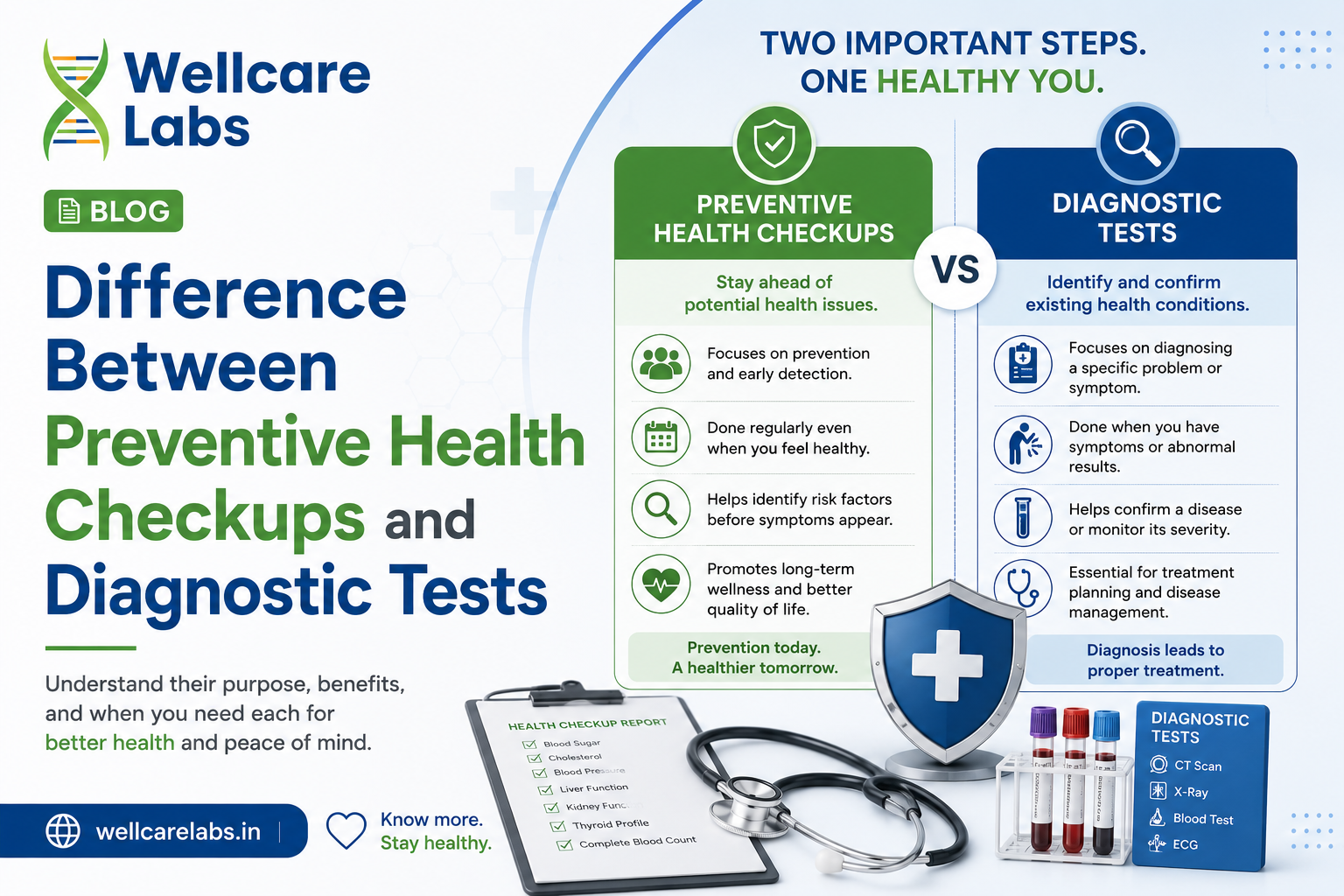
While preventive health checkups focus on identifying risks before symptoms appear, diagnostic tests are usually performed to confirm or investigate an existing health problem.
Knowing when and why these tests are needed can help individuals make better healthcare decisions.
What Are Preventive Health Checkups?
Preventive health checkups are routine medical screenings performed even when a person feels healthy and has no noticeable symptoms.
The goal is to:
- Detect diseases early
- Identify health risks
- Monitor overall wellness
- Prevent future complications
Preventive screening helps doctors identify silent conditions before they become serious.
Common Tests Included in Preventive Health Checkups
Preventive health packages often include:
- Blood sugar tests
- Lipid profile
- Complete Blood Count (CBC)
- Liver function tests
- Kidney function tests
- Thyroid profile
- Vitamin deficiency tests
- Urine analysis
These tests provide a general overview of overall health condition.
What Are Diagnostic Tests?
Diagnostic tests are performed when a person already has symptoms or when a doctor suspects a specific medical condition.
These tests help:
- Confirm a disease
- Identify the cause of symptoms
- Monitor an existing illness
- Guide treatment decisions
Diagnostic testing is more targeted compared to preventive screening.
Common Examples of Diagnostic Tests
Doctors may recommend diagnostic tests for symptoms such as fever, fatigue, chest pain, or abnormal blood sugar.
Examples include:
- HbA1c Test for diabetes confirmation
- ECG for chest pain
- ESR or CRP tests for inflammation
- MRI or ultrasound scans
- Biopsy procedures
- Hormonal testing
The type of test depends on symptoms and medical history.
Main Difference Between Preventive and Diagnostic Testing
1. Purpose
Preventive Health Checkups:
Done to detect risks before symptoms appear.
Diagnostic Tests:
Done to identify or confirm a suspected disease.
2. Timing
Preventive Checkups:
Performed routinely even in healthy individuals.
Diagnostic Tests:
Performed after symptoms, abnormal reports, or medical concerns arise.
3. Focus Area
Preventive Screening:
Focuses on overall health and early risk detection.
Diagnostic Testing:
Focuses on a specific disease or condition.
4. Frequency
Preventive Health Checkups:
Usually recommended annually or based on age and risk factors.
Diagnostic Tests:
Done whenever symptoms or medical conditions require investigation.
Why Preventive Health Checkups Are Important
Many diseases develop silently without early symptoms.
Preventive screening helps detect:
- Diabetes
- High cholesterol
- High blood pressure
- Thyroid disorders
- Kidney disease
- Vitamin deficiencies
Early detection often improves treatment outcomes and reduces complications.
Why Diagnostic Tests Are Important
Diagnostic testing helps doctors:
- Confirm health conditions accurately
- Understand severity of illness
- Plan proper treatment
- Monitor disease progression
Without proper diagnosis, treatment may become delayed or ineffective.
Can Preventive Tests Become Diagnostic?
Yes, sometimes preventive health screening may detect abnormal results that require further diagnostic testing.
For example:
- High blood sugar during routine screening may lead to diabetes testing
- Abnormal cholesterol levels may require cardiac evaluation
- Low hemoglobin may need additional iron studies
Preventive testing often acts as the first step toward early diagnosis.
Who Should Get Preventive Health Checkups?
Preventive screening is recommended for:
- Adults above 30 years
- Individuals with stressful lifestyles
- People with family history of chronic diseases
- Smokers and alcohol consumers
- Individuals with obesity or sedentary routines
Even healthy individuals should consider routine annual checkups.
Symptoms That May Require Diagnostic Testing
Diagnostic tests become necessary if you experience:
- Frequent fatigue
- Fever
- Sudden weight changes
- Excessive thirst
- Chest pain
- Breathing difficulty
- Persistent weakness
Medical evaluation helps identify the underlying cause quickly.
Benefits of Early Detection Through Preventive Care
Preventive healthcare can help:
- Reduce disease complications
- Improve quality of life
- Lower healthcare costs
- Support healthier lifestyle changes
- Improve long-term wellness
Early awareness often leads to better disease management.
Importance of Choosing a Reliable Diagnostic Lab
Accurate testing is essential for both preventive screening and disease diagnosis.
Wellcare Labs provides dependable pathology and diagnostic services using advanced technology, experienced professionals, and quality-focused processes. Their commitment to precision and timely reporting helps individuals make informed healthcare decisions with confidence.
Final Thoughts
Preventive health checkups and diagnostic tests both play important roles in healthcare, but they serve different purposes.
Preventive screening focuses on identifying risks early before symptoms appear, while diagnostic testing helps confirm and investigate existing health concerns. Together, they support better disease management, early intervention, and improved long-term health outcomes.
Regular health monitoring and timely medical testing are important steps toward maintaining a healthier life.