Dengue Symptoms and Blood Tests in Pune
Introduction
With the arrival of monsoon in Pune, cases of dengue fever tend to rise significantly. Dengue is a mosquito-borne viral infection that can range from mild flu-like illness to severe complications if left untreated. Early diagnosis through blood tests is crucial for proper treatment and recovery.
If you or a family member is experiencing persistent fever, body aches, headache, or unexplained weakness, understanding the symptoms of dengue and getting tested promptly can make a significant difference.
What is Dengue?
Dengue is caused by the dengue virus and is transmitted through the bite of infected Aedes mosquitoes. These mosquitoes typically breed in stagnant water found around homes, construction sites, gardens, and residential societies.
Monsoon and post-monsoon seasons create ideal breeding conditions, making Pune and surrounding PCMC areas more vulnerable to dengue outbreaks every year.
Common Dengue Symptoms
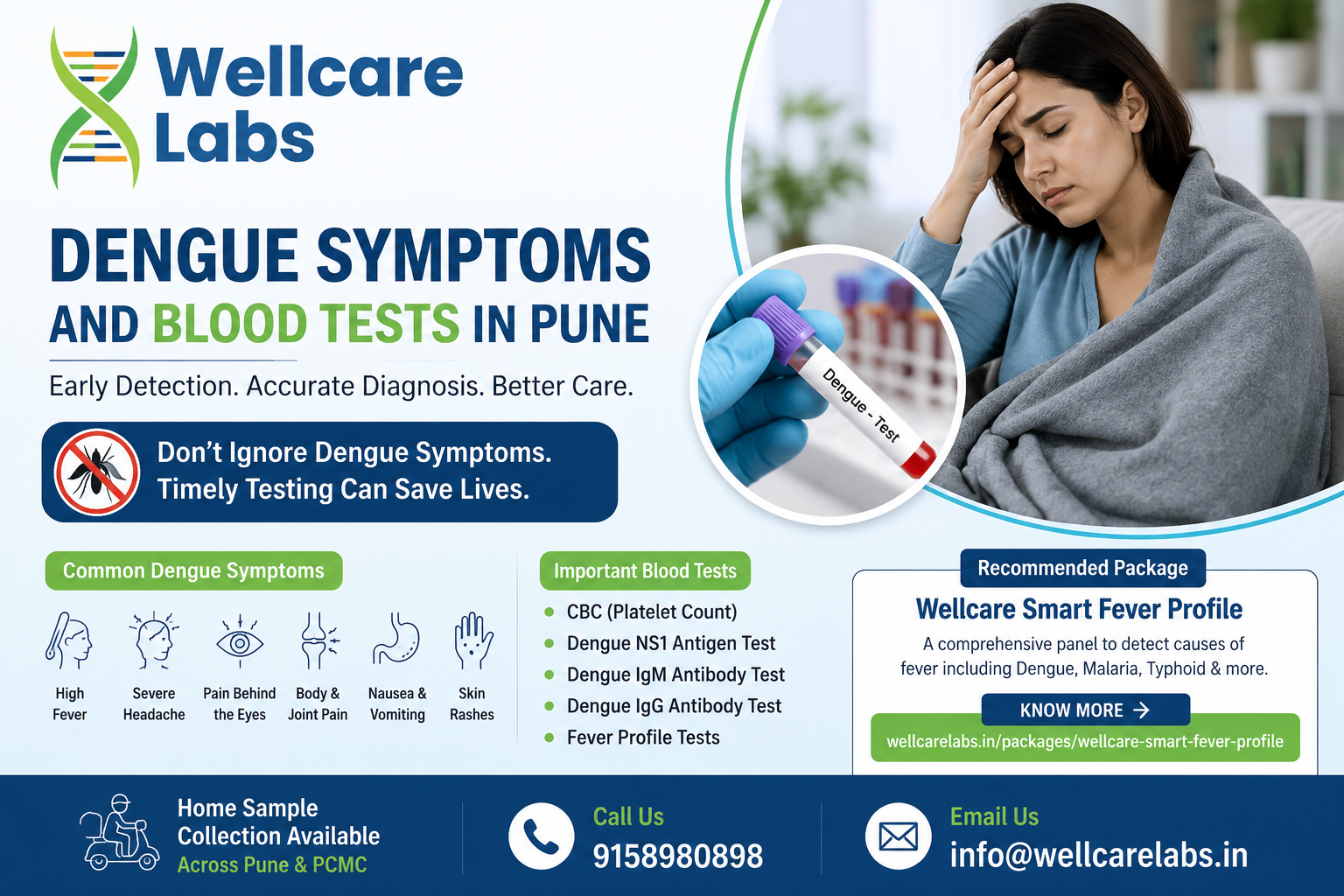
Symptoms usually appear 4–10 days after a mosquito bite and may include:
Early Symptoms
- Sudden high fever (102°F–104°F)
- Severe headache
- Pain behind the eyes
- Chills and fatigue
- Joint and muscle pain
- Loss of appetite
- Nausea and vomiting
Advanced Symptoms
- Skin rashes
- Persistent vomiting
- Severe abdominal pain
- Bleeding gums
- Nosebleeds
- Excessive weakness
- Difficulty breathing
If any of these symptoms occur, immediate medical consultation is recommended.
Why Dengue Diagnosis Can Be Difficult
Many dengue symptoms overlap with other common monsoon illnesses such as:
- Malaria
- Typhoid
- Viral fever
- Chikungunya
Because symptoms are similar, relying on symptoms alone can lead to delayed or incorrect treatment. Laboratory investigations are essential for accurate diagnosis. Fever profile testing is commonly recommended to identify the exact cause of fever and rule out multiple infections simultaneously.
Important Blood Tests for Dengue
1. Complete Blood Count (CBC)
CBC helps monitor:
- Platelet count
- White blood cell count
- Hemoglobin levels
A falling platelet count is often associated with dengue infection and requires close monitoring.
2. Dengue NS1 Antigen Test
This is one of the earliest tests used for dengue detection and is most effective during the first few days of infection.
3. Dengue IgM Antibody Test
Used to detect recent dengue infection after the initial phase.
4. Dengue IgG Antibody Test
Helps identify past exposure or secondary dengue infection.
5. Fever Profile Testing
Doctors often recommend a comprehensive fever profile because fever during monsoon may be caused by dengue, malaria, typhoid, or other infections. Fever profiles typically include CBC and infection screening tests that help identify the underlying cause more quickly.
When Should You Get Tested?
You should consider a dengue blood test if:
- Fever persists for more than 2–3 days
- You experience severe body pain and weakness
- There is a dengue outbreak in your locality
- Platelet count begins to drop
- Your doctor suspects dengue infection
Early testing allows doctors to monitor platelet levels and prevent complications.
Dengue Cases in Pune During Monsoon
Areas with dense residential populations and water accumulation often experience increased mosquito breeding. Residents of Wakad, Hinjawadi, Baner, Balewadi, Aundh, Kharadi, Pimple Saudagar, Ravet, Punawale, and Pimpri-Chinchwad should remain especially vigilant during the rainy season.
Simple preventive measures include:
- Avoiding stagnant water accumulation
- Using mosquito repellents
- Wearing full-sleeved clothing
- Keeping water storage containers covered
Recommended Fever Testing Package in Pune
If you're experiencing fever symptoms and want a cost-effective screening option, the Wellcare Smart Fever Profile can help evaluate common causes of fever through multiple diagnostic parameters.
The package includes tests such as CBC, ESR, Malarial Parasite screening, liver-related markers, and other important investigations used by physicians when evaluating fever-related illnesses. It is especially useful during the monsoon season when dengue, malaria, and typhoid cases increase.
You can learn more about the package here:
https://wellcarelabs.in/packages/wellcare-smart-fever-profile
Why Early Detection Matters
Most dengue patients recover completely with proper medical supervision. However, delayed diagnosis can lead to severe dengue, dehydration, bleeding complications, and hospitalization.
The key is simple:
Don't ignore persistent fever during monsoon. Get tested early, monitor your health, and consult a healthcare professional promptly.
Frequently Asked Questions
Can dengue be diagnosed through a blood test?
Yes. Tests such as Dengue NS1 Antigen, Dengue IgM, Dengue IgG, and CBC are commonly used for diagnosis.
Does dengue always cause low platelets?
Not always. Platelet counts may remain normal in the early stages and should be monitored over time.
Is home sample collection available in Pune?
Many diagnostic laboratories, including Wellcare Labs, offer home blood collection services across Pune and PCMC.
Which blood test is best for fever?
Doctors often recommend a fever profile that includes CBC and screening tests for dengue, malaria, and typhoid depending on symptoms.
Conclusion
Dengue remains one of the most common monsoon illnesses in Pune. Recognizing symptoms early and undergoing the appropriate blood tests can help prevent complications and ensure faster recovery.
If you or your loved ones are experiencing persistent fever, don't wait. Timely testing and medical advice can make all the difference.