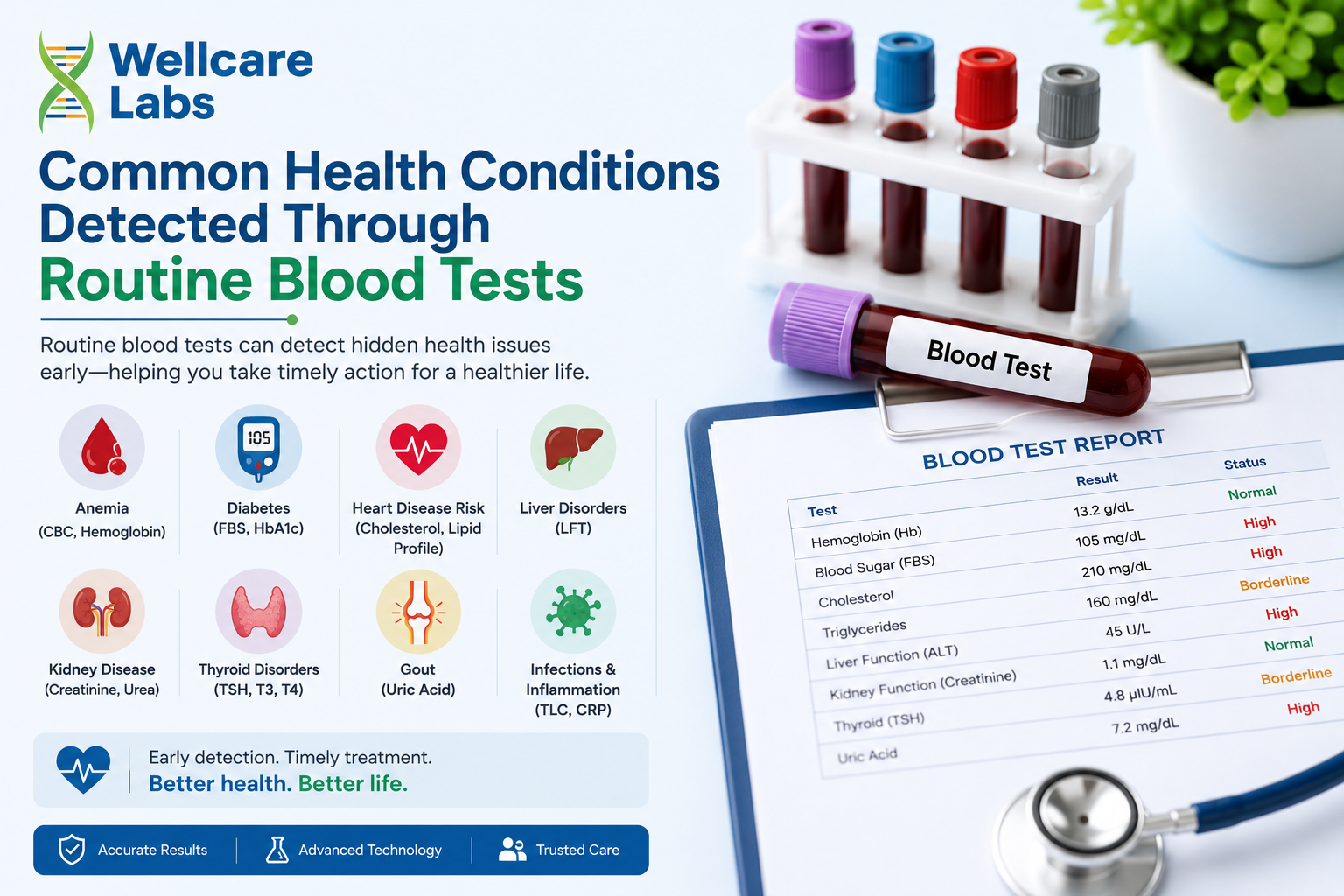
Common Health Conditions Detected Through Routine Blood Tests
Common Health Conditions Detected Through Routine Blood Tests
Many health conditions develop silently without showing noticeable symptoms in the early stages. This is why routine blood tests are considered an important part of preventive healthcare.
Simple blood investigations can provide valuable insights into your body’s internal functioning and help doctors identify potential health problems before they become serious.
From diabetes and anemia to thyroid disorders and infections, routine blood tests can help detect several common conditions early and improve treatment outcomes.
Why Are Routine Blood Tests Important?
Routine blood tests help:
- Monitor overall health
- Detect diseases early
- Identify nutritional deficiencies
- Evaluate organ function
- Track ongoing medical conditions
- Prevent complications through timely diagnosis
Early detection often leads to faster treatment and better long-term health management.
1. Diabetes
One of the most common conditions detected through blood tests is diabetes.
Common Tests Used:
- Fasting Blood Sugar (FBS)
- Random Blood Sugar (RBS)
- HbA1c Test
These tests measure blood glucose levels and help identify:
- Prediabetes
- Type 1 diabetes
- Type 2 diabetes
- Poor blood sugar control
Early diagnosis is important because uncontrolled diabetes can affect the heart, kidneys, eyes, and nerves.
2. Anemia
Anemia occurs when the body does not have enough healthy red blood cells or hemoglobin.
Tests That Help Detect Anemia:
- Complete Blood Count (CBC)
- Hemoglobin Test
- Iron Studies
Symptoms May Include:
- Fatigue
- Weakness
- Dizziness
- Pale skin
- Shortness of breath
Routine blood tests can identify anemia before symptoms become severe.
3. Thyroid Disorders
The thyroid gland controls metabolism, energy levels, and hormone balance.
Common Thyroid Tests:
- TSH (Thyroid Stimulating Hormone)
- T3 and T4 Tests
Blood tests can help detect:
- Hypothyroidism
- Hyperthyroidism
- Hormonal imbalance
Untreated thyroid conditions can affect weight, mood, heart health, and overall energy levels.
4. High Cholesterol and Heart Disease Risk
Lipid profile tests measure cholesterol and fat levels in the blood.
The Test Evaluates:
- Total cholesterol
- LDL (bad cholesterol)
- HDL (good cholesterol)
- Triglycerides
Abnormal cholesterol levels increase the risk of:
- Heart disease
- Stroke
- High blood pressure
Regular screening helps maintain better cardiovascular health.
5. Liver Disorders
Liver function tests help evaluate how well the liver is working.
Blood Tests Can Detect:
- Fatty liver disease
- Liver inflammation
- Hepatitis
- Alcohol-related liver damage
Early liver disease often has no symptoms, making routine testing very important.
6. Kidney Problems
Kidney function tests monitor waste removal and fluid balance in the body.
Common Kidney Tests:
- Creatinine Test
- Blood Urea Nitrogen (BUN)
- Urine Microalbumin Test
These tests help detect:
- Kidney infections
- Chronic kidney disease
- Diabetes-related kidney damage
7. Infections and Inflammation
Blood tests can help identify infections caused by bacteria, viruses, or inflammation.
Tests Commonly Used:
- White Blood Cell Count (WBC)
- ESR Test
- CRP Test
These tests assist doctors in diagnosing:
- Viral infections
- Bacterial infections
- Autoimmune disorders
- Inflammatory conditions
8. Vitamin and Nutritional Deficiencies
Routine blood tests can detect deficiencies that affect overall health.
Common Nutrient Tests:
- Vitamin D Test
- Vitamin B12 Test
- Iron Studies
Deficiencies may cause:
- Fatigue
- Muscle weakness
- Hair fall
- Poor immunity
9. Blood Clotting Disorders
Platelet count and clotting tests help evaluate blood clotting ability.
Abnormal results may indicate:
- Bleeding disorders
- Excessive clotting risks
- Bone marrow issues
These tests are especially important before surgeries or medical procedures.
10. Hormonal Imbalances
Certain blood tests measure hormone levels that affect multiple body functions.
Hormonal testing may help detect:
- PCOS
- Reproductive health problems
- Stress-related hormone imbalance
- Adrenal disorders
How Often Should You Get Blood Tests Done?
The frequency depends on:
- Age
- Lifestyle
- Family history
- Existing health conditions
- Doctor recommendations
Generally, adults should consider routine health screening annually.
Symptoms That Should Not Be Ignored
Doctors may recommend blood tests if you experience:
- Constant fatigue
- Sudden weight changes
- Frequent infections
- Hair loss
- Dizziness
- Excessive thirst
- Weakness
Early testing helps prevent complications and supports timely treatment.
Importance of Choosing a Trusted Diagnostic Lab
Accurate testing plays a major role in proper diagnosis and treatment planning.
Wellcare Labs offers dependable pathology and diagnostic services with advanced testing technology, experienced professionals, and timely reporting. Their focus on precision and patient care helps individuals make informed healthcare decisions with confidence.
Final Thoughts
Routine blood tests are one of the simplest yet most effective ways to monitor your health and detect diseases early.
Many serious health conditions can be managed better when identified at an early stage. Regular preventive testing not only improves treatment outcomes but also helps maintain long-term health and peace of mind.
Taking proactive steps today can help protect your health in the future.